There are dishes that feed your stomach, and there are dishes that feed your soul. Chiles en Nogada is definitely the latter.
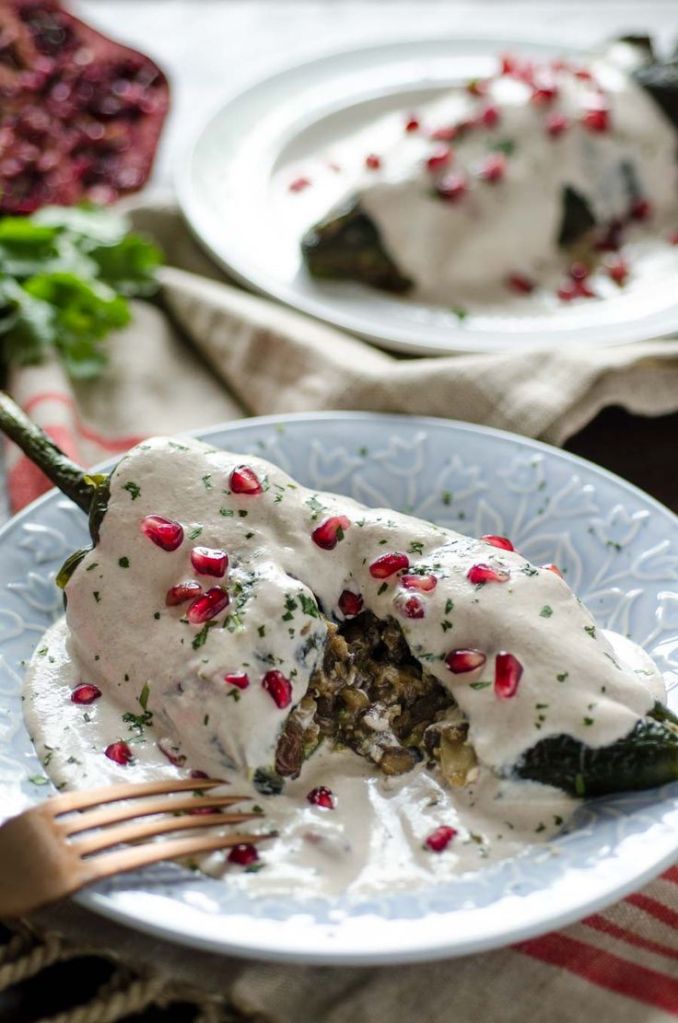
The first time I saw it, I honestly thought it was dessert roasted green peppers stuffed with meat and fruit, covered in a silky white walnut sauce, and sprinkled with jewel-like pomegranate seeds. It was a painting on a plate – green, white, and red, the exact colors of the Mexican flag.
I remember that first bite vividly: creamy and nutty from the walnut sauce, warm spice from the filling, that gentle pop of pomegranate, and the mild sweetness of the chile poblano. It’s one of those dishes that makes you pause and think – whoever invented this loved food deeply.
👉 Have you ever tasted something that felt like a celebration of life itself? That’s what Chiles en Nogada is.
Table of contents
What Is Chiles en Nogada?
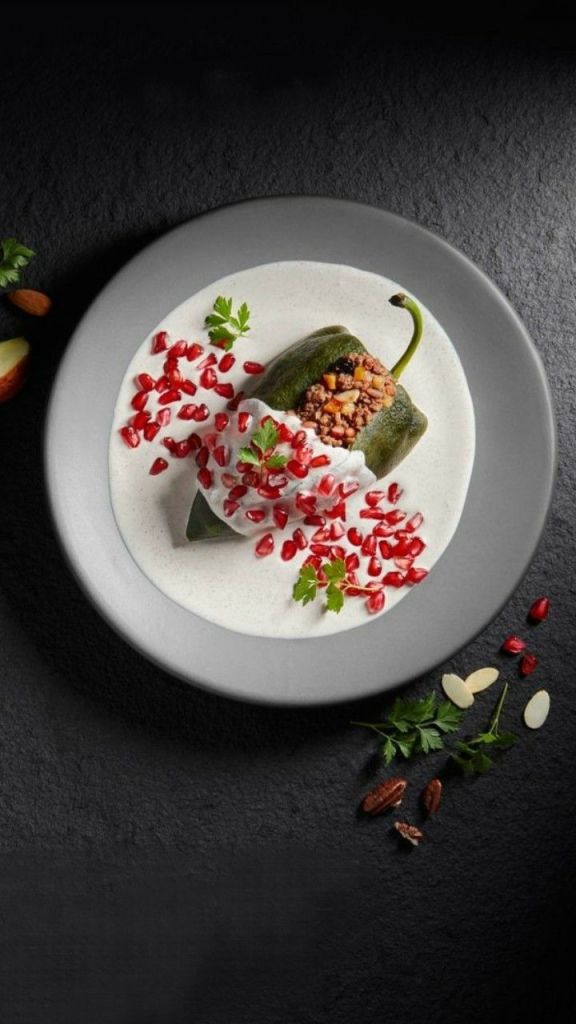
Chiles en Nogada (pronounced CHEE-lehs en no-GAH-dah) is a traditional Mexican dish from Puebla. It features roasted poblano peppers stuffed with a savory-sweet mixture of minced meat, fruit, and spices, topped with a creamy walnut sauce (nogada) and garnished with pomegranate seeds.
It’s typically served around Mexican Independence Day (September 16), when the country bursts into color and celebration, fitting, since the dish mirrors the flag itself: green (chile), white (sauce), and red (pomegranate).
The Story Behind the Dish
The origin of Chiles en Nogada dates back to 1821, when Mexico gained independence from Spain. According to legend, nuns from the Santa Mónica convent in Puebla created this dish to honor General Agustín de Iturbide, one of the leaders of the independence movement.
They used local ingredients to symbolize the new nation’s colors and thus, Chiles en Nogada was born.
It’s a dish with poetry in every element, history, patriotism, and artistry all cooked into one.
If you’re into culinary storytelling, read BBC Travel’s piece on Mexico’s flag-inspired feast — it captures the beauty behind this iconic creation.
Difference Between Chiles en Nogada and Stuffed Peppers
| Feature | Chiles en Nogada | Regular Stuffed Peppers |
|---|---|---|
| Origin | Puebla, Mexico | Global variations |
| Main Filling | Sweet-savory meat and fruit | Usually rice, vegetables, or cheese |
| Sauce | Walnut cream (nogada) | Tomato or cheese-based |
| Temperature | Served at room temperature | Typically served hot |
| Purpose | Celebratory national dish | Everyday meal |
Why You’ll Fall in Love with It
Because no other dish in the world balances sweet, savory, creamy, and tangy so perfectly. Each bite is a symphony – smoky chile, tender filling, velvety sauce, and that burst of fruitiness.
It’s not an everyday meal; it’s the kind of dish you make to impress yourself or to mark something special. But surprisingly, it’s not as complicated as it looks just requires a little love and patience.
Btw A good skillet is essential when browning your picadillo filling – you want steady heat and even caramelization.
👉 I use the Lodge Cast Iron Skillet, 10-inch – it sears meat beautifully and lasts a lifetime.
Recipe for Chiles en Nogada

Chiles En Nogada Recipe
Equipment
- Cast Iron or Heavy Skillet
- Blender or food processor
- Mixing bowls
Ingredients
For the Filling (Picadillo)
- 500 g ground beef or pork or a mix
- 2 tbsp olive oil
- 1 small onion chopped
- 2 garlic cloves minced
- 2 medium tomatoes diced
- 1 apple peeled and diced
- 1 pear peeled and diced
- 1 peach peeled and diced
- 2 tbsp raisins
- 2 tbsp sliced almonds
- 1 tsp cinnamon powder
- ½ tsp ground cloves
- Salt and pepper to taste
For the Chiles and Sauce
- 4 large poblano peppers
- 1 cup walnuts soaked in warm milk for 2 hours
- ½ cup milk
- ½ cup cream or Mexican crema
- 100 g queso fresco or cream cheese
- 1 tbsp sugar
- Salt to taste
For Garnish
- Pomegranate seeds
- Fresh parsley chopped
Instructions
Roast the Poblanos
- Roast the poblano peppers directly over an open flame or under a broiler until the skins blister and blacken. Place them in a covered bowl to steam for 10 minutes. Peel gently, slit one side, and remove the seeds without tearing.
Make the Filling
- In a skillet, heat olive oil. Add onions and garlic, sauté until fragrant. Add the ground meat and cook until browned. Stir in tomatoes, fruit, raisins, almonds, and spices. Simmer until everything softens and blends into a rich, fragrant mixture (about 15 minutes).
Prepare the Walnut Sauce (Nogada)
- Drain the soaked walnuts and blend them with milk, cream, cheese, sugar, and a pinch of salt until creamy and smooth. Adjust sweetness if needed.
Assemble
- Stuff each roasted chile with the warm picadillo filling. Arrange on a serving plate. Spoon the nogada sauce generously over the top.
Garnish and Serve
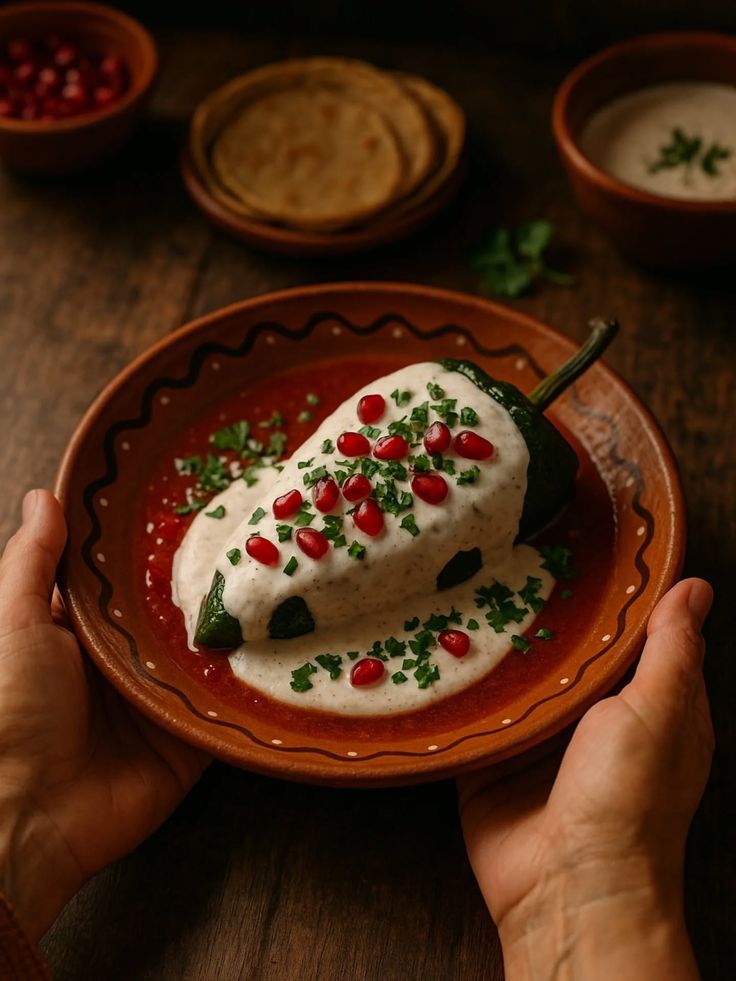
- Sprinkle pomegranate seeds and chopped parsley over each chile. Serve at room temperature for the most balanced flavor.
Notes
- Always soak walnuts to remove bitterness.
- Serve the dish slightly cool — not hot — to preserve the sauce’s flavor.
- If poblano peppers are unavailable, use Anaheim peppers.
- A few drops of honey in the sauce deepen the walnut aroma beautifully.
Nutrition
Variations
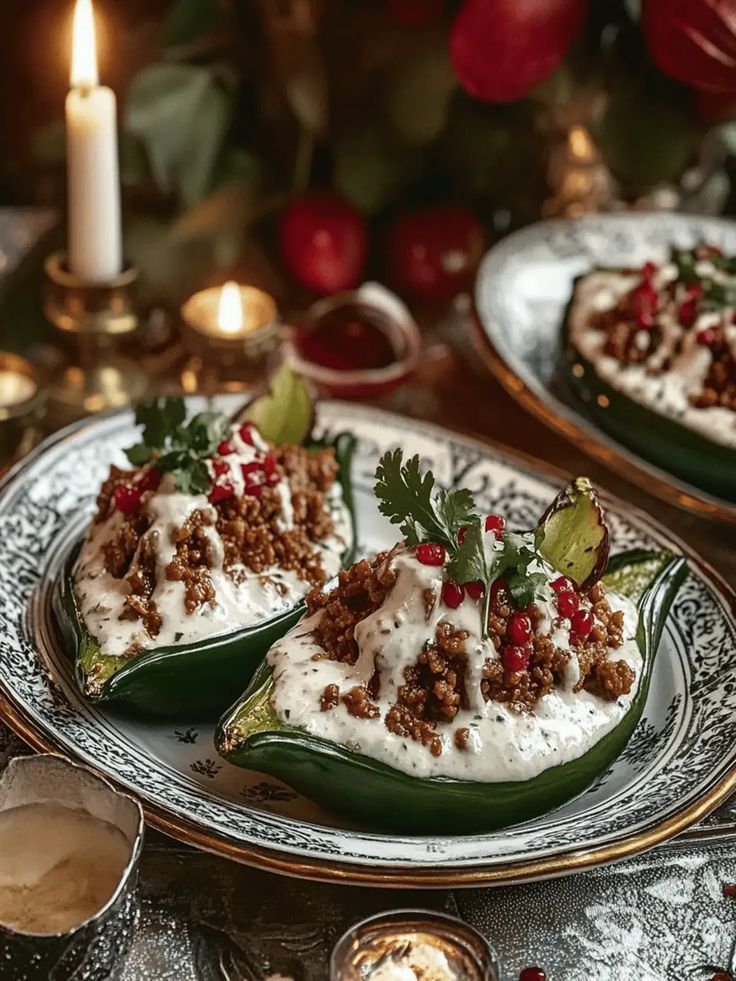
- Vegetarian: Replace meat with quinoa, nuts, and sautéed mushrooms.
- Vegan: Use plant-based cream and omit cheese.
- Regional Touches: Some cooks add plantains or candied fruit to the picadillo for extra sweetness.
Substitutes
- Poblano Peppers → Anaheim or green bell peppers (milder flavor)
- Walnuts → Cashews or almonds (different taste, but still creamy)
- Queso Fresco → Ricotta or soft goat cheese
- Pomegranate → Diced strawberries or cranberries in a pinch

Reversible shredding and slicing discs – medium to fine with integrated feed tube to add ingredients during processing
Pairing Ideas
Chiles en Nogada pairs beautifully with:
- Light Mexican rice or herbed quinoa
- A crisp white wine like Sauvignon Blanc
- Agua fresca (try hibiscus or tamarind)
- Fresh salad with lime vinaigrette
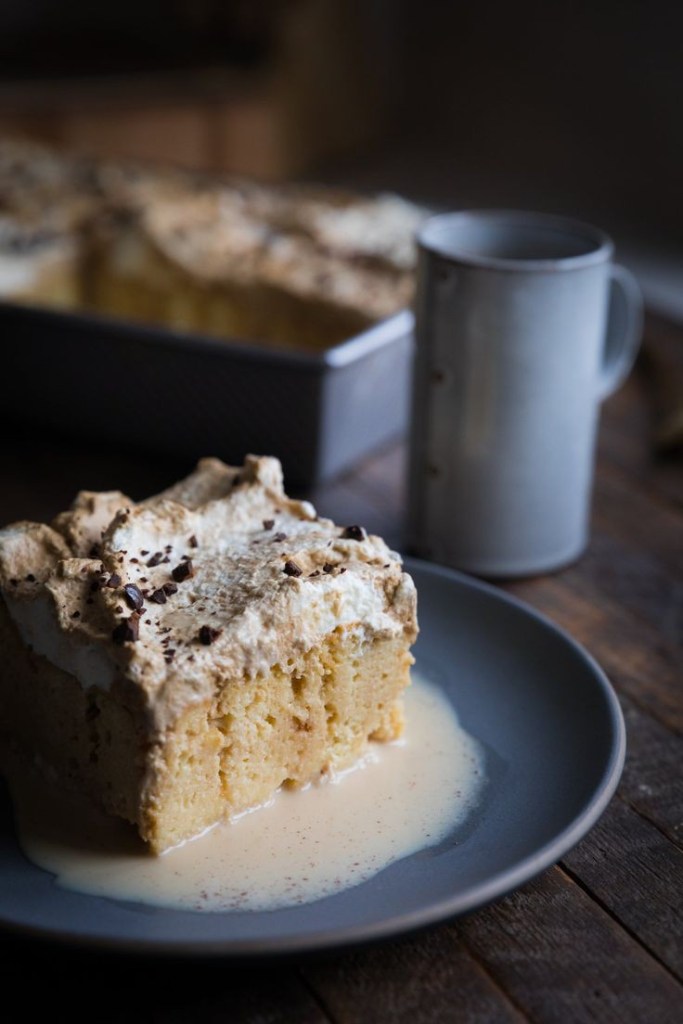
- A light dessert like flan or tres leches cake
Mexican recipes to try


Chiles en Nogada FAQ
| Question | Answer |
|---|---|
| Is Chiles en Nogada spicy? | No, it’s mild and balanced. The poblano provides flavor, not heat. |
| Can I make it ahead of time? | Yes! You can prep the filling and sauce a day before and assemble before serving. |
| Can I freeze it? | The filling can be frozen, but the walnut sauce is best made fresh. |
| Why soak the walnuts? | It softens them and removes bitterness, creating a smooth, creamy sauce. |
| What if I can’t find poblano peppers? | Anaheim or large green bell peppers make good substitutes. |
| Can I serve it warm? | Traditionally, it’s served at room temperature — heat dulls the sauce’s delicate flavor. |
| How long does the sauce last? | Up to 2 days in the fridge, covered. Stir before serving. |
| Can I skip the fruit in the filling? | You can, but the fruit adds the signature sweet-savory depth that defines the dish. |
| What’s the meaning behind the colors? | Green (chile), white (sauce), and red (pomegranate) represent the Mexican flag. |
| What’s the best time to make it? | Late summer to early fall — when walnuts, pomegranates, and poblano peppers are in season. |
Closing Thoughts
Chiles en Nogada isn’t just a recipe – it’s Mexico on a plate. A dish born from creativity, love, and pride, combining flavors that shouldn’t work together but somehow create perfection.
It’s not about speed or simplicity – it’s about beauty, patience, and celebrating culture through food. Every time I make it, I feel like I’m painting with flavor.
So, when you make this at home, don’t rush it. Roast, fill, drizzle, and admire what you’ve created. Because this isn’t just cooking — it’s storytelling.
👉 Would you go classic with beef or try a vegetarian twist with lentils and nuts? I’d love to hear which version you’d make first.