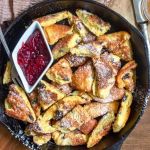
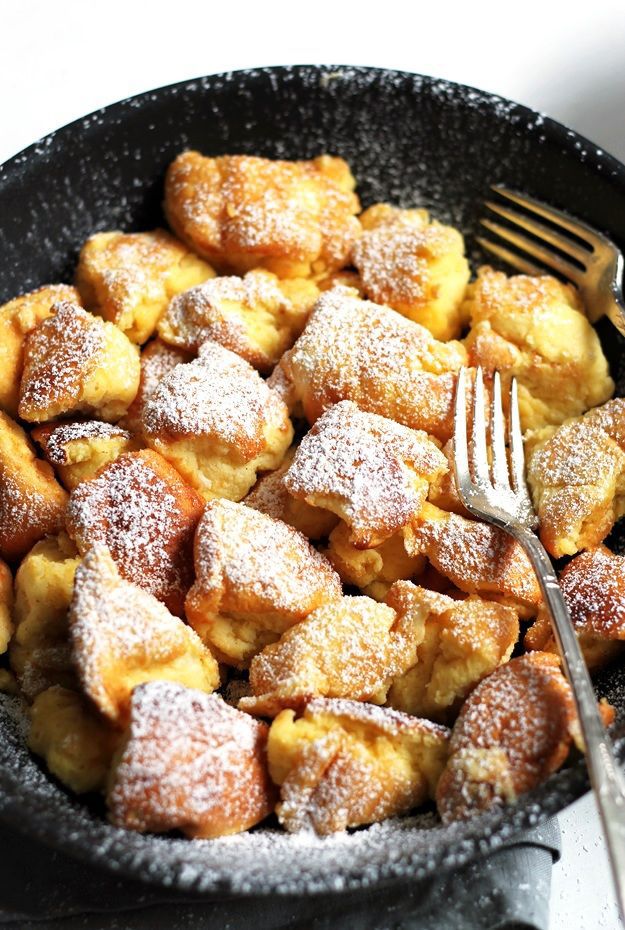
The first time I had Kaiserschmarrn was in a tiny Alpine café during a ski trip. I thought I was ordering just another pancake, but what landed on the table looked like fluffy golden shreds dusted with powdered sugar and served with plum compote. One bite later, I was hooked. Light yet indulgent, sweet but not cloying, it was comfort food disguised as a royal dessert.
👉 Have you ever ordered something you thought would be simple and ended up discovering your new favorite dish?
Kaiserschmarrn literally means “Emperor’s mess” and the name fits perfectly because it looks rustic and torn apart but tastes divine. Legend says it was a favorite of Austrian Emperor Franz Joseph I in the 19th century, and the dish has been tied to Austrian royal kitchens ever since. Traditionally, it is a caramelized shredded pancake made with eggs, flour, sugar, and butter, often served with fruit compote.
This is not just a pancake. Kaiserschmarrn is fluffy, caramelized at the edges, and comes with the fun of being torn apart in the pan before serving. It’s Austria’s comfort food at its best - hearty enough to be eaten as a main dish after a long hike, yet elegant enough to be served as a dessert in fine restaurants. Whether you’re visiting Vienna or cooking at home, Kaiserschmarrn is a must-try because it blends tradition, texture, and pure indulgence in every bite.
👉 Would you eat it as dessert or happily have it for dinner?
Difference Between Kaiserschmarrn and Other Pancakes
American pancakes vs Kaiserschmarrn: American pancakes are stacked and uniform, while Kaiserschmarrn is torn into pieces and served rustic-style.
French crêpes vs Kaiserschmarrn : Crêpes are thin and delicate, Kaiserschmarrn is thick, fluffy, and caramelized.
Dutch baby vs Kaiserschmarrn : Dutch babies are baked and puff dramatically in the oven, Kaiserschmarrn is cooked on the stove and deliberately broken apart.
German Pfannkuchen vs Kaiserschmarrn : German pancakes are flatter and less fluffy, Kaiserschmarrn is airy thanks to beaten egg whites.
Fun Facts About Kaiserschmarrn
It is often eaten as a main course, not just dessert, especially after skiing or hiking in Austria.
The Emperor supposedly preferred his Kaiserschmarrn with plum compote, setting the trend for centuries.
Austrian mountain huts still serve it piping hot in large pans for sharing.
The “messy” look is intentional, it symbolizes rustic charm despite its royal name.
Recipe for Austrian Kaiserschmarrn
Austrian kaiserschmarrn recipe
Kaiserschmarrn, also called the Emperor’s Pancake, is a fluffy, caramelized Austrian pancake that’s torn into rustic pieces, dusted with powdered sugar, and served with fruit compote or applesauce. It’s simple, cozy, and irresistibly delicious.
whisk or electric mixer
10–12 inch nonstick or cast iron skillet
Mixing bowls and spatula
Fork
4 No large eggs
1/2 cup all-purpose flour
1/4 cup granulated sugar
1/2 cup milk
1/4 teaspoon salt
2 tablespoons unsalted butter
Powdered sugar (for dusting)
Raisins or sliced apples (optional)
Fruit compote or applesauce (for serving (optional))
Separate and prepare eggs
Crack the eggs and separate the yolks and whites into two bowls. In the bowl with yolks, whisk together the flour, sugar, milk, and salt until smooth. The batter should be thick but pourable.
Whip the egg whites
Using a whisk or electric mixer, beat the egg whites until stiff peaks form. This step is what gives the pancake its light, airy texture.
Fold the batter
Gently fold the whipped egg whites into the yolk batter in two to three additions. Use a spatula and light movements to keep the air in the mixture.
Cook the pancake
Heat the butter in a skillet over medium heat. Pour in the batter, spreading it evenly. If using raisins or apples, scatter them over the surface. Cook for 3 to 4 minutes until the bottom is golden and set.
Flip and tear
Use a spatula to cut the pancake into halves or quarters, then flip each piece. Cook another 3 to 4 minutes until cooked through. Use two forks or the spatula to tear the pancake into rustic bite-sized pieces directly in the pan.
Caramelize lightly
Optional but delicious: sprinkle a teaspoon of sugar over the torn pieces and let them caramelize in the skillet for a minute.
Serve
Transfer the Kaiserschmarrn to plates, dust generously with powdered sugar, and serve with fruit compote or applesauce on the side.
Egg whites are key: Whipping them until stiff peaks form gives the dish its signature fluffiness.
Caramelize for flavor: A sprinkle of sugar in the pan adds a golden, crunchy finish.
Serving style: Kaiserschmarrn is meant to be torn and rustic, don’t worry about perfect shapes.
Make it your own: Add rum-soaked raisins, grated apples, or even a pinch of cinnamon for extra warmth.
Best fresh: Eat it straight from the pan, it loses its fluff if left too long.
Egg whites weren’t whipped enough or folded too roughly
Whip to stiff peaks and fold gently into the yolk batter
Pancake sticks to pan
Using too little butter or a poor-quality pan
Use a well-buttered nonstick or cast iron skillet
Burnt bottom
Heat too high
Cook on medium heat, let it set slowly
Undercooked center
Pancake too thick or rushed cooking
Cook covered for a few minutes before tearing
Flat texture
Egg whites deflated during mixing
Fold in small batches with a light hand
Too sweet or cloying
Too much sugar or overly sweet compote
Balance with tart fruit compote like plum or lingonberry
Dry Kaiserschmarrn
Overcooked after tearing
Cook just until golden, then serve immediately
Missing fluff
Skipping egg separation
Always separate eggs, the whipped whites make it airy
Bitter taste
Burned sugar when caramelizing
Sprinkle lightly and watch carefully when caramelizing
Soggy pieces
Served too long after cooking
Enjoy hot and fresh, this dish doesn’t hold well
Variations
Over time, Kaiserschmarrn has picked up regional twists. In Tyrol, it often comes with raisins soaked in rum, while in Salzburg you might find versions served with lingonberry jam. Some cooks add grated apples or nuts for extra flavor, while modern versions lighten the batter with stiff egg whites for an even fluffier bite. If you love chocolate, you’ll even find chefs sneaking in cocoa powder for a decadent twist.
Substitutes and Pairings
Substitutes
All-purpose flour can be swapped with spelt flour or whole wheat for a rustic version.
Dairy-free? Use oat milk and vegan butter.
No raisins? Try cranberries, dried cherries, or skip them entirely.
Pairings
Plum compote or stewed apples for traditional flair
A cup of Viennese coffee or mulled wine to make it feel like a ski lodge treat
Kaiserschmarrn FAQ
Question
Answer
Why is it torn apart?
That’s the charm! It is cut or shredded in the pan to caramelize the edges and make it fluffy inside.
Can I make it ahead?
It’s best fresh, but you can reheat leftovers in a skillet with a little butter.
Do I have to add raisins?
Not at all, raisins are traditional but optional.
Can I bake it instead of frying?
Yes, some versions are baked in the oven, then torn before serving.
What toppings are authentic?
Plum compote, apple sauce, or powdered sugar are most traditional.
Can it be savory?
Rarely, but you can reduce the sugar and pair with herbs and cheese.
Is it eaten as dessert or main?
Both! In Austria, it’s often served as a main course after soup.
Why is it called “Emperor’s Mess”?
Named after Emperor Franz Joseph who adored it, and because of its rustic, “messy” look.
How do I make it fluffier?
Separate the eggs, whip the whites to stiff peaks, and fold them into the batter.
Can I freeze it?
Not recommended, as it loses texture. Fresh is always best.
Wrapping It Up
Kaiserschmarrn is proof that not all desserts need to look perfect to taste perfect. Its charm lies in its golden, torn-up look, dusted with sugar and paired with something tart on the side. Whether you’re traveling through Austria or making it in your own kitchen, this dish is a sweet reminder that food doesn’t have to be neat to be extraordinary.
👉 Would you prefer to enjoy Kaiserschmarrn on a cozy winter night with mulled wine, or as a summer treat with fresh berries and ice cream?
The first time I had Kaiserschmarrn was in a tiny Alpine café during a ski trip. I thought I was ordering just another pancake, but what landed on the table looked like fluffy golden shreds dusted with powdered sugar and served with plum compote. One bite later, I was hooked. Light yet indulgent, sweet but not cloying, it was comfort food disguised as a royal dessert.
👉 Have you ever ordered something you thought would be simple and ended up discovering your new favorite dish?
Kaiserschmarrn literally means “Emperor’s mess” and the name fits perfectly because it looks rustic and torn apart but tastes divine. Legend says it was a favorite of Austrian Emperor Franz Joseph I in the 19th century, and the dish has been tied to Austrian royal kitchens ever since. Traditionally, it is a caramelized shredded pancake made with eggs, flour, sugar, and butter, often served with fruit compote.
This is not just a pancake. Kaiserschmarrn is fluffy, caramelized at the edges, and comes with the fun of being torn apart in the pan before serving. It’s Austria’s comfort food at its best - hearty enough to be eaten as a main dish after a long hike, yet elegant enough to be served as a dessert in fine restaurants. Whether you’re visiting Vienna or cooking at home, Kaiserschmarrn is a must-try because it blends tradition, texture, and pure indulgence in every bite.
👉 Would you eat it as dessert or happily have it for dinner?
Difference Between Kaiserschmarrn and Other Pancakes
American pancakes vs Kaiserschmarrn: American pancakes are stacked and uniform, while Kaiserschmarrn is torn into pieces and served rustic-style.
French crêpes vs Kaiserschmarrn : Crêpes are thin and delicate, Kaiserschmarrn is thick, fluffy, and caramelized.
Dutch baby vs Kaiserschmarrn : Dutch babies are baked and puff dramatically in the oven, Kaiserschmarrn is cooked on the stove and deliberately broken apart.
German Pfannkuchen vs Kaiserschmarrn : German pancakes are flatter and less fluffy, Kaiserschmarrn is airy thanks to beaten egg whites.
Fun Facts About Kaiserschmarrn
It is often eaten as a main course, not just dessert, especially after skiing or hiking in Austria.
The Emperor supposedly preferred his Kaiserschmarrn with plum compote, setting the trend for centuries.
Austrian mountain huts still serve it piping hot in large pans for sharing.
The “messy” look is intentional, it symbolizes rustic charm despite its royal name.
Recipe for Austrian Kaiserschmarrn
Austrian kaiserschmarrn recipe
Kaiserschmarrn, also called the Emperor’s Pancake, is a fluffy, caramelized Austrian pancake that’s torn into rustic pieces, dusted with powdered sugar, and served with fruit compote or applesauce. It’s simple, cozy, and irresistibly delicious.
whisk or electric mixer
10–12 inch nonstick or cast iron skillet
Mixing bowls and spatula
Fork
4 No large eggs
1/2 cup all-purpose flour
1/4 cup granulated sugar
1/2 cup milk
1/4 teaspoon salt
2 tablespoons unsalted butter
Powdered sugar (for dusting)
Raisins or sliced apples (optional)
Fruit compote or applesauce (for serving (optional))
Separate and prepare eggs
Crack the eggs and separate the yolks and whites into two bowls. In the bowl with yolks, whisk together the flour, sugar, milk, and salt until smooth. The batter should be thick but pourable.
Whip the egg whites
Using a whisk or electric mixer, beat the egg whites until stiff peaks form. This step is what gives the pancake its light, airy texture.
Fold the batter
Gently fold the whipped egg whites into the yolk batter in two to three additions. Use a spatula and light movements to keep the air in the mixture.
Cook the pancake
Heat the butter in a skillet over medium heat. Pour in the batter, spreading it evenly. If using raisins or apples, scatter them over the surface. Cook for 3 to 4 minutes until the bottom is golden and set.
Flip and tear
Use a spatula to cut the pancake into halves or quarters, then flip each piece. Cook another 3 to 4 minutes until cooked through. Use two forks or the spatula to tear the pancake into rustic bite-sized pieces directly in the pan.
Caramelize lightly
Optional but delicious: sprinkle a teaspoon of sugar over the torn pieces and let them caramelize in the skillet for a minute.
Serve
Transfer the Kaiserschmarrn to plates, dust generously with powdered sugar, and serve with fruit compote or applesauce on the side.
Egg whites are key: Whipping them until stiff peaks form gives the dish its signature fluffiness.
Caramelize for flavor: A sprinkle of sugar in the pan adds a golden, crunchy finish.
Serving style: Kaiserschmarrn is meant to be torn and rustic, don’t worry about perfect shapes.
Make it your own: Add rum-soaked raisins, grated apples, or even a pinch of cinnamon for extra warmth.
Best fresh: Eat it straight from the pan, it loses its fluff if left too long.
Egg whites weren’t whipped enough or folded too roughly
Whip to stiff peaks and fold gently into the yolk batter
Pancake sticks to pan
Using too little butter or a poor-quality pan
Use a well-buttered nonstick or cast iron skillet
Burnt bottom
Heat too high
Cook on medium heat, let it set slowly
Undercooked center
Pancake too thick or rushed cooking
Cook covered for a few minutes before tearing
Flat texture
Egg whites deflated during mixing
Fold in small batches with a light hand
Too sweet or cloying
Too much sugar or overly sweet compote
Balance with tart fruit compote like plum or lingonberry
Dry Kaiserschmarrn
Overcooked after tearing
Cook just until golden, then serve immediately
Missing fluff
Skipping egg separation
Always separate eggs, the whipped whites make it airy
Bitter taste
Burned sugar when caramelizing
Sprinkle lightly and watch carefully when caramelizing
Soggy pieces
Served too long after cooking
Enjoy hot and fresh, this dish doesn’t hold well
Variations
Over time, Kaiserschmarrn has picked up regional twists. In Tyrol, it often comes with raisins soaked in rum, while in Salzburg you might find versions served with lingonberry jam. Some cooks add grated apples or nuts for extra flavor, while modern versions lighten the batter with stiff egg whites for an even fluffier bite. If you love chocolate, you’ll even find chefs sneaking in cocoa powder for a decadent twist.
Substitutes and Pairings
Substitutes
All-purpose flour can be swapped with spelt flour or whole wheat for a rustic version.
Dairy-free? Use oat milk and vegan butter.
No raisins? Try cranberries, dried cherries, or skip them entirely.
Pairings
Plum compote or stewed apples for traditional flair
A cup of Viennese coffee or mulled wine to make it feel like a ski lodge treat
Kaiserschmarrn FAQ
Question
Answer
Why is it torn apart?
That’s the charm! It is cut or shredded in the pan to caramelize the edges and make it fluffy inside.
Can I make it ahead?
It’s best fresh, but you can reheat leftovers in a skillet with a little butter.
Do I have to add raisins?
Not at all, raisins are traditional but optional.
Can I bake it instead of frying?
Yes, some versions are baked in the oven, then torn before serving.
What toppings are authentic?
Plum compote, apple sauce, or powdered sugar are most traditional.
Can it be savory?
Rarely, but you can reduce the sugar and pair with herbs and cheese.
Is it eaten as dessert or main?
Both! In Austria, it’s often served as a main course after soup.
Why is it called “Emperor’s Mess”?
Named after Emperor Franz Joseph who adored it, and because of its rustic, “messy” look.
How do I make it fluffier?
Separate the eggs, whip the whites to stiff peaks, and fold them into the batter.
Can I freeze it?
Not recommended, as it loses texture. Fresh is always best.
Wrapping It Up
Kaiserschmarrn is proof that not all desserts need to look perfect to taste perfect. Its charm lies in its golden, torn-up look, dusted with sugar and paired with something tart on the side. Whether you’re traveling through Austria or making it in your own kitchen, this dish is a sweet reminder that food doesn’t have to be neat to be extraordinary.
👉 Would you prefer to enjoy Kaiserschmarrn on a cozy winter night with mulled wine, or as a summer treat with fresh berries and ice cream?