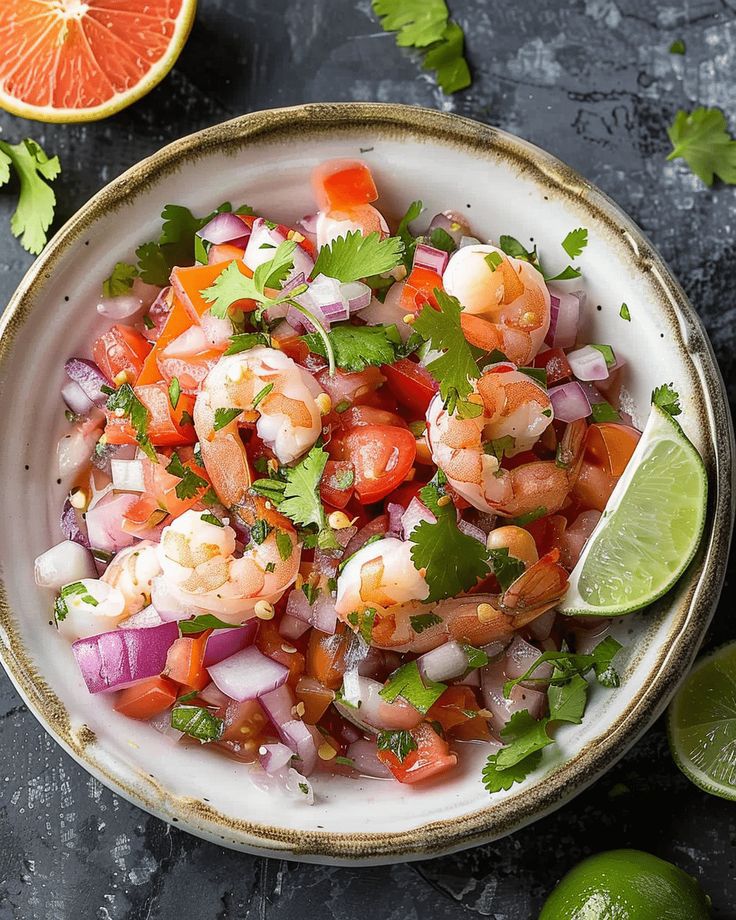
I still remember the first time I had ceviche on a beach in Mexico. The waiter brought out this bowl of colors that looked like summer itself - ruby red tomatoes, green cilantro, pink shrimp, and that hit of lime ( did not know it was called ceviche de Camarón or shrimp ceviche ) so fresh it could wake the dead. I took one bite, and I swear I felt the ocean breeze in my lungs.
When I got back home, I tried making it myself. I overdid the lime, forgot the salt, and ended up with something so sour my eyes watered. But by the third try, I nailed it. And once you get that balance of citrus, heat, and freshness right, ceviche becomes addictive.
👉 Be honest, do you prefer your ceviche spicy enough to make your lips tingle, or more on the mild, refreshing side.
Ceviche de Camarón is a traditional Latin American seafood dish made with shrimp marinated in lime juice until “cooked” by the acidity. It’s then mixed with chopped tomatoes, onions, cilantro, and chilies. Unlike deep-fried shrimp or cooked stews, ceviche is fresh, raw, and alive — it’s sunshine food.
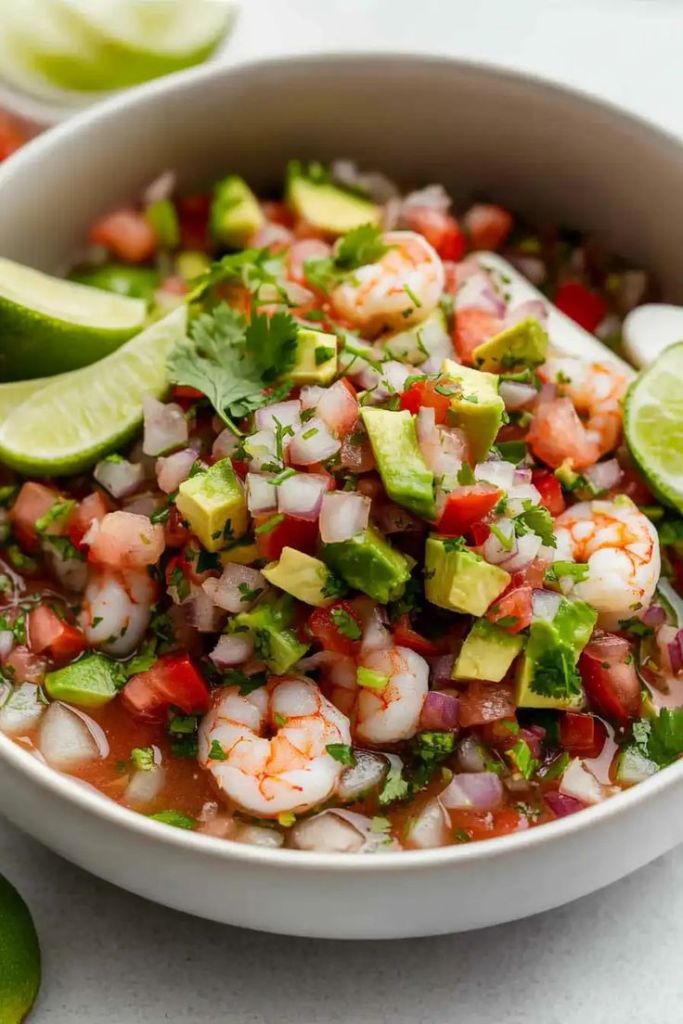
The dish is especially popular in Ecuador, Mexico, and Peru, each with their own twist. Mexican ceviche often includes tomato, avocado, and hot sauce, while Peruvian ceviche is known for its simplicity and bold citrus kick.
If you want to read about its fascinating history and cultural evolution, Serious Eats has a great piece tracing ceviche’s roots from ancient Peru to modern beach stalls.
Source: Pinterest ( Credits to respective creator )
Why It’s So Loved
Because it’s light yet flavorful, healthy yet indulgent. Ceviche has that rare magic where every ingredient feels alive. The shrimp are firm but tender, the citrus bright, the onions sharp, and the avocado silky — all combining into the most satisfying bite of freshness.
It’s:
Refreshing and perfect for warm weather
Packed with protein and vitamins
Naturally gluten-free
Quick to prepare with no stovetop drama
Bright, colorful, and always a conversation starter
Difference Between Shrimp Ceviche and Fish Ceviche
Feature
Shrimp Ceviche (Ceviche de Camarón)
Fish Ceviche
Main Ingredient
Shrimp (usually pre-cooked or marinated)
White fish like sea bass or snapper
Texture
Firm and juicy
Soft and delicate
Color
Pink-orange
White-translucent
Marination Time
20 to 30 minutes
10 to 15 minutes
Flavor Profile
Slightly sweeter
More tangy and briny
💡 Tip: Shrimp ceviche is great for beginners since it’s easier to handle safely and keeps its bite better than delicate fish.
Recipe for Ceviche de Camarón
Delicious Ceviche de Camarón ( Shrimp ceviche ) recipe
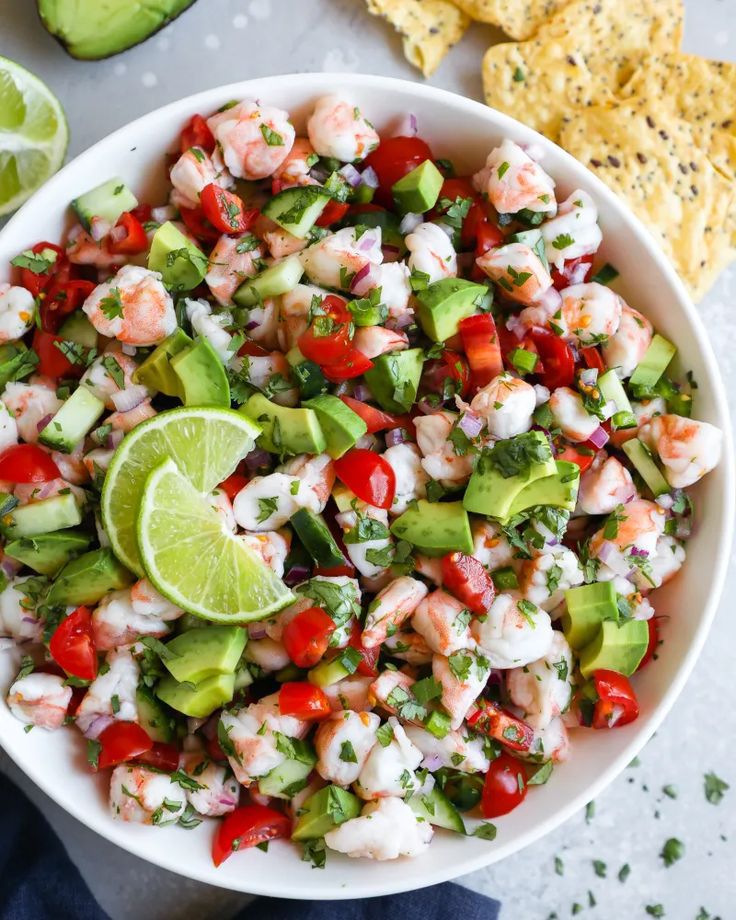
A refreshing, citrusy shrimp ceviche marinated in lime juice, mixed with tomato, onion, cilantro, and avocado for a bright, beach-style flavor explosion.
Mixing bowls
Citrus juicer
500 g 1 lb medium shrimp, peeled and deveined
1 cup fresh lime juice (about 8–10 limes)
2 medium tomatoes (diced)
½ cup red onion (finely chopped)
1 cucumber (peeled and diced)
1 jalapeño or serrano pepper (finely chopped)
½ cup chopped cilantro
1 ripe avocado (diced)
Salt and black pepper to taste
Optional: a splash of orange juice or hot sauce
Prep the Shrimp
If using raw shrimp, blanch them briefly in boiling water for 1 minute until they just turn pink, then plunge into ice water to stop cooking. Drain well.
Marinate the Shrimp
Place shrimp in a glass bowl and pour fresh lime juice over them. Stir, cover, and refrigerate for 20 to 25 minutes until the shrimp turn opaque and firm.
Drain and Mix
Drain about half of the lime juice (leave a little for flavor). Add diced tomato, onion, cucumber, jalapeño, and cilantro. Mix gently.
Add Avocado and Season
Fold in avocado, then season with salt, black pepper, and a splash of orange juice or hot sauce if desired.
Chill and Serve
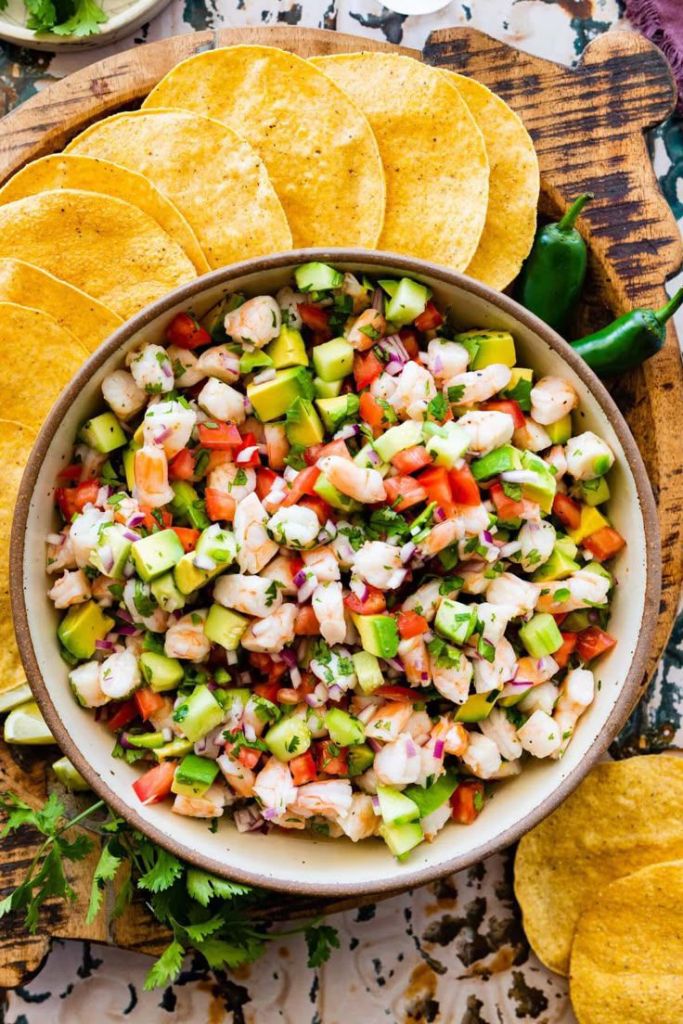
Refrigerate for another 10 minutes to let the flavors blend. Serve chilled with tortilla chips, tostadas, or over a bed of lettuce.
Always use fresh shrimp and juice your limes right before marinating.
For more sweetness, add chopped mango or pineapple.
If using precooked shrimp, skip the lime “cooking” step and just marinate briefly for flavor.
Shrimp turned rubbery: It marinated too long. Next time, reduce lime time to 20–25 minutes.
Too sour: Add diced mango, orange juice, or ketchup (yes, in Mexico it’s common).
Too salty: Add a little more chopped tomato or avocado to balance it.
Flat flavor: A few drops of hot sauce or extra cilantro instantly revive it.
Too watery: Drain excess liquid before serving or use fewer juicy tomatoes.
Variations and Substitutes
Tropical Shrimp Ceviche: Add diced pineapple or mango for a sweet contrast.
Avocado Ceviche: Stir in chunks of creamy avocado for richness.
Ceviche Verde: Use tomatillos and jalapeño for a green version.
Spicy Ceviche: Add extra serrano or habanero if you’re brave.
Vegan Ceviche: Substitute shrimp with hearts of palm or young coconut slices.
If you want to make the marinating easier, I use the OXO Good Grips Citrus Juicer to extract every drop of lime — trust me, your hands will thank you after juicing 10 limes.
Pairings and Serving Ideas
Ceviche de Camarón is the kind of dish that shines on its own but turns heavenly with the right pairings.
Best Sides and Complements:
Tostadas or Tortilla Chips – the crunch balances the softness of the shrimp
Avocado Slices or Guacamole – smooth, creamy texture against citrus tang
Cold Beer or Michelada – the classic pairing, no explanation needed
Mango Salsa or Pico de Gallo – extra sweetness and color
Coconut Rice or Quinoa Salad – makes it a filling meal
Chef’s Tip: Serve it chilled in clear bowls or cocktail glasses for that beach-side restaurant vibe.
And yes, keep a Glass Mixing Bowl Set handy — stainless steel can sometimes react with citrus and affect flavor.
Source: Pinterest ( Credits to respective creator )
10 Common Ceviche de Camarón Problems
Problem
What Happened
How to Fix It
Shrimp too tough
Over-marinated
Reduce lime time, add more tomato
Too sour
Too much lime
Mix in orange juice or diced mango
Too salty
Over-seasoned
Add avocado or tomato
Too bland
Weak citrus
Add zest or splash of vinegar
Watery mix
Juicy tomatoes
Drain before serving
Bitter taste
Old lime or over-zesting
Use fresh limes only
Mushy shrimp
Used frozen, thawed too long
Use firm fresh shrimp next time
No “kick”
Mild peppers
Add chili flakes or hot sauce
Overpowering onion
Cut too thick
Soak onions in cold water 10 mins before mixing
Not fresh enough
Ingredients sat too long
Serve immediately after chilling
Conclusion
Ceviche de Camarón is proof that sometimes, the simplest dishes hold the most joy. It’s bright, refreshing, and endlessly customizable. You don’t cook it with fire, you cook it with lime and love.
Next time you crave something fresh and flavorful, skip the stove and grab your limes. Because one bite of homemade ceviche can transport you to a beach in Mexico, even if you’re standing barefoot in your kitchen.
👉 What’s your favorite ceviche twist — mango, avocado, or extra chili heat? Tell me below!
I still remember the first time I had ceviche on a beach in Mexico. The waiter brought out this bowl of colors that looked like summer itself - ruby red tomatoes, green cilantro, pink shrimp, and that hit of lime ( did not know it was called ceviche de Camarón or shrimp ceviche ) so fresh it could wake the dead. I took one bite, and I swear I felt the ocean breeze in my lungs.
When I got back home, I tried making it myself. I overdid the lime, forgot the salt, and ended up with something so sour my eyes watered. But by the third try, I nailed it. And once you get that balance of citrus, heat, and freshness right, ceviche becomes addictive.
👉 Be honest, do you prefer your ceviche spicy enough to make your lips tingle, or more on the mild, refreshing side.
Ceviche de Camarón is a traditional Latin American seafood dish made with shrimp marinated in lime juice until “cooked” by the acidity. It’s then mixed with chopped tomatoes, onions, cilantro, and chilies. Unlike deep-fried shrimp or cooked stews, ceviche is fresh, raw, and alive — it’s sunshine food.
The dish is especially popular in Ecuador, Mexico, and Peru, each with their own twist. Mexican ceviche often includes tomato, avocado, and hot sauce, while Peruvian ceviche is known for its simplicity and bold citrus kick.
If you want to read about its fascinating history and cultural evolution, Serious Eats has a great piece tracing ceviche’s roots from ancient Peru to modern beach stalls.
Source: Pinterest ( Credits to respective creator )
Why It’s So Loved
Because it’s light yet flavorful, healthy yet indulgent. Ceviche has that rare magic where every ingredient feels alive. The shrimp are firm but tender, the citrus bright, the onions sharp, and the avocado silky — all combining into the most satisfying bite of freshness.
It’s:
Refreshing and perfect for warm weather
Packed with protein and vitamins
Naturally gluten-free
Quick to prepare with no stovetop drama
Bright, colorful, and always a conversation starter
Difference Between Shrimp Ceviche and Fish Ceviche
Feature
Shrimp Ceviche (Ceviche de Camarón)
Fish Ceviche
Main Ingredient
Shrimp (usually pre-cooked or marinated)
White fish like sea bass or snapper
Texture
Firm and juicy
Soft and delicate
Color
Pink-orange
White-translucent
Marination Time
20 to 30 minutes
10 to 15 minutes
Flavor Profile
Slightly sweeter
More tangy and briny
💡 Tip: Shrimp ceviche is great for beginners since it’s easier to handle safely and keeps its bite better than delicate fish.
Recipe for Ceviche de Camarón
Delicious Ceviche de Camarón ( Shrimp ceviche ) recipe
A refreshing, citrusy shrimp ceviche marinated in lime juice, mixed with tomato, onion, cilantro, and avocado for a bright, beach-style flavor explosion.
Mixing bowls
Citrus juicer
500 g 1 lb medium shrimp, peeled and deveined
1 cup fresh lime juice (about 8–10 limes)
2 medium tomatoes (diced)
½ cup red onion (finely chopped)
1 cucumber (peeled and diced)
1 jalapeño or serrano pepper (finely chopped)
½ cup chopped cilantro
1 ripe avocado (diced)
Salt and black pepper to taste
Optional: a splash of orange juice or hot sauce
Prep the Shrimp
If using raw shrimp, blanch them briefly in boiling water for 1 minute until they just turn pink, then plunge into ice water to stop cooking. Drain well.
Marinate the Shrimp
Place shrimp in a glass bowl and pour fresh lime juice over them. Stir, cover, and refrigerate for 20 to 25 minutes until the shrimp turn opaque and firm.
Drain and Mix
Drain about half of the lime juice (leave a little for flavor). Add diced tomato, onion, cucumber, jalapeño, and cilantro. Mix gently.
Add Avocado and Season
Fold in avocado, then season with salt, black pepper, and a splash of orange juice or hot sauce if desired.
Chill and Serve
Refrigerate for another 10 minutes to let the flavors blend. Serve chilled with tortilla chips, tostadas, or over a bed of lettuce.
Always use fresh shrimp and juice your limes right before marinating.
For more sweetness, add chopped mango or pineapple.
If using precooked shrimp, skip the lime “cooking” step and just marinate briefly for flavor.
Shrimp turned rubbery: It marinated too long. Next time, reduce lime time to 20–25 minutes.
Too sour: Add diced mango, orange juice, or ketchup (yes, in Mexico it’s common).
Too salty: Add a little more chopped tomato or avocado to balance it.
Flat flavor: A few drops of hot sauce or extra cilantro instantly revive it.
Too watery: Drain excess liquid before serving or use fewer juicy tomatoes.
Variations and Substitutes
Tropical Shrimp Ceviche: Add diced pineapple or mango for a sweet contrast.
Avocado Ceviche: Stir in chunks of creamy avocado for richness.
Ceviche Verde: Use tomatillos and jalapeño for a green version.
Spicy Ceviche: Add extra serrano or habanero if you’re brave.
Vegan Ceviche: Substitute shrimp with hearts of palm or young coconut slices.
If you want to make the marinating easier, I use the OXO Good Grips Citrus Juicer to extract every drop of lime — trust me, your hands will thank you after juicing 10 limes.
Pairings and Serving Ideas
Ceviche de Camarón is the kind of dish that shines on its own but turns heavenly with the right pairings.
Best Sides and Complements:
Tostadas or Tortilla Chips – the crunch balances the softness of the shrimp
Avocado Slices or Guacamole – smooth, creamy texture against citrus tang
Cold Beer or Michelada – the classic pairing, no explanation needed
Mango Salsa or Pico de Gallo – extra sweetness and color
Coconut Rice or Quinoa Salad – makes it a filling meal
Chef’s Tip: Serve it chilled in clear bowls or cocktail glasses for that beach-side restaurant vibe.
And yes, keep a Glass Mixing Bowl Set handy — stainless steel can sometimes react with citrus and affect flavor.
Source: Pinterest ( Credits to respective creator )
10 Common Ceviche de Camarón Problems
Problem
What Happened
How to Fix It
Shrimp too tough
Over-marinated
Reduce lime time, add more tomato
Too sour
Too much lime
Mix in orange juice or diced mango
Too salty
Over-seasoned
Add avocado or tomato
Too bland
Weak citrus
Add zest or splash of vinegar
Watery mix
Juicy tomatoes
Drain before serving
Bitter taste
Old lime or over-zesting
Use fresh limes only
Mushy shrimp
Used frozen, thawed too long
Use firm fresh shrimp next time
No “kick”
Mild peppers
Add chili flakes or hot sauce
Overpowering onion
Cut too thick
Soak onions in cold water 10 mins before mixing
Not fresh enough
Ingredients sat too long
Serve immediately after chilling
Conclusion
Ceviche de Camarón is proof that sometimes, the simplest dishes hold the most joy. It’s bright, refreshing, and endlessly customizable. You don’t cook it with fire, you cook it with lime and love.
Next time you crave something fresh and flavorful, skip the stove and grab your limes. Because one bite of homemade ceviche can transport you to a beach in Mexico, even if you’re standing barefoot in your kitchen.
👉 What’s your favorite ceviche twist — mango, avocado, or extra chili heat? Tell me below!