Sweet Pongal Recipe
Ah, Sweet Pongal! Just the name brings a wave of nostalgia, transporting me to my grandmother’s bustling kitchen during the harvest festival of Pongal. The aroma of jaggery melting into a golden syrup, mingled with the nuttiness of roasted cashews and the rich warmth of ghee, was irresistible. I was the little kitchen elf, sneaking spoonfuls when no one was looking! Today, I’m inviting you to recreate this magical dish in your own home, with a unique twist or two to make it truly yours.
Growing up, Sweet Pongal was synonymous with celebration. During the Pongal festival, the first spoonful would always be offered to the Sun God, as part of a beautiful tradition to express gratitude. For a dessert-loving child like me, waiting for that ceremonial moment was pure torture but the reward was oh-so-worth-it.
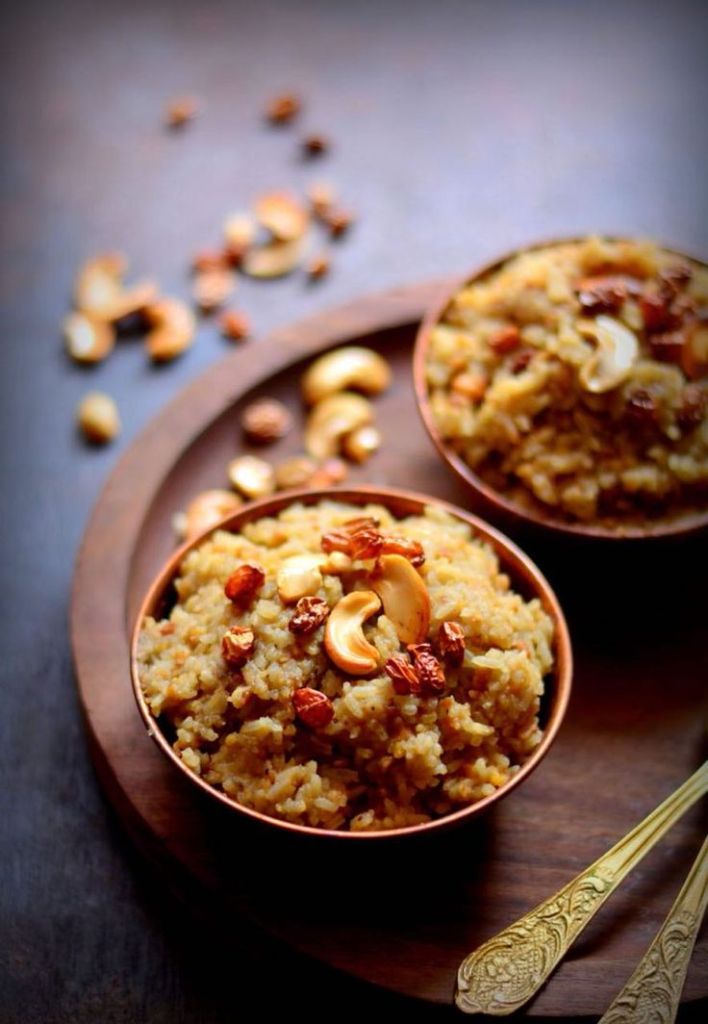
One of my most memorable Sweet Pongal experiences was when I decided to experiment by adding grated coconut and a pinch of nutmeg. The result? A richer, creamier version that quickly became a family favorite. It’s moments like these that make this dish so special, a little tradition, a little innovation, and a lot of love.
Table of contents
What is Sweet Pongal?
Sweet Pongal, or Sakkarai Pongal in Tamil, is a beloved South Indian dessert made with rice, moong dal, jaggery, ghee, and a touch of aromatic spices. Traditionally prepared during the harvest festival of Pongal, it’s a dish that symbolizes gratitude for nature’s bounty and prosperity.
Curious about the origins of Pongal and its history? Click here to learn more about this vibrant festival.
Fun Facts About Sweet Pongal
- Ancient Legacy: Sweet Pongal has been a staple in Tamil cuisine for centuries, with mentions in ancient Tamil literature.
- Temple Offering: This dessert is a common offering in South Indian temples, where it’s prepared as prasadam (religious offering).
- Healthier Than You Think: With jaggery as a natural sweetener and moong dal providing protein, Sweet Pongal is a comforting yet balanced treat.
Unique Sweet Pongal Recipe
Ingredients:
- 1/2 cup raw rice or short-grain rice (like Sona Masoori)
- 1/4 cup moong dal (yellow lentils)
- 1 cup jaggery (grated or powdered)
- 2 1/2 cups water
- 1/2 cup milk (optional, for creaminess)
- 1/4 cup ghee
- 10 cashews
- 10 raisins
- 1/2 tsp cardamom powder
- A pinch of edible camphor (optional)
- A few strands of saffron (soaked in warm milk)
Instructions:
- Dry roast the moong dal until golden and aromatic. Rinse it along with the rice.
- Pressure cook the rice and dal mixture with 2 1/2 cups of water until soft and mushy.
- In a pan, melt jaggery with 1/4 cup water and strain to remove impurities.
- Add the jaggery syrup to the cooked rice-dal mixture and mix well.
- Stir in milk (if using), and let it simmer for 5 minutes.
- Heat ghee in a small pan, roast cashews until golden, then add raisins. Pour this fragrant ghee mixture into the Pongal.
- Add cardamom powder, edible camphor (if using), and saffron milk. Stir well.
- Serve warm, garnished with more roasted nuts if desired.

How to make Sweet Pongal recipe ?
Equipment
- Pressure cooker or Cooking pot
- Kadai
Ingredients
- 100 g Raw rice or short grain rice as you like
- 50 g Moong dal
- 15 Ghee For roasting the dal
- 600 ml Water
- 250 g Jaggery Or Brown sugar
- 50 g Ghee
- 25 g Cashews
- 5 g Green cardamom
- 25 g Raisins
- 50 ml Milk optional
- 1 g Edible camphor or pachai karpooram optional
- 50 g Grated coconut
Instructions
In pressure cooker
- Rinse the rice and moong dal together under running water until the water runs clear. Set aside to drain.
- In a pressure cooker, add ghee and once heated up add crushed green cardamom and soaked moong dal and rice and sauté in ghee for one minute.
- Then add the required water as mentioned and close the lid and let it whistle for 3-4 times in a medium heat.
- In the mean time, in a separate kadai, add the crushed jaggery and little 25 ml water and let it melt completely.
- Chef's tip: Add a pinch of tumeric powder in jaggery and it will give nice golden look on the end product.
- There is no any consistency checks just let the jaggery dissolve and Strain the syrup to remove impurities, if any, and set it aside.
- Open the pressure cooker and mash the cooked rice and dal mixture gently with a ladle.
- Add the jaggery syrup to the mixture and mix well. Simmer on low heat for 5-7 minutes, stirring occasionally. In this stage if you want to add milk, you can add and let it simmer.
- Heat ghee in a small pan, and roast the cashews until golden. Add raisins and sauté until they puff up. Add the grated coconut separately in ghee and roast till golden brown and add.
- Add the roasted nuts, edible camphor (optional) to the Pongal. Mix well.
In cooking pot
- Rinse the rice and moong dal together under running water until the water runs clear. Set aside to drain.
- In a cooking pot, add ghee and rinsed rice and al and sauté for 1 minute in medium heat.
- Add the required water and stir occasionally and keep in medium heat. Once the rice is mashed and cooked nicely that is more than well done.
- In the mean time, in a separate kadai, add the crushed jaggery and little 25 ml water and let it melt completely. There is no any consistency checks just let the jaggery dissolve and Strain the syrup to remove impurities, if any, and set it aside.
- Add crushed cardamom or cardamom powder, brown sugar or jaggery syrup as mentioned before. you can also add milk.
- Stir in low heat for 5-10 minutes and allowing the flavors to meld.
- Heat ghee in a small pan, and roast the cashews until golden. Add raisins and sauté until they puff up. Add the grated coconut separately in ghee and roast till golden brown and add.
- Add the roasted nuts, tossed grated coconut, edible camphor (optional). Mix thoroughly.
Notes
- Roast moong dal and nuts in ghee for extra flavor.
- Add a touch of vanilla extract or nutmeg for a flavor twist.
- If it thickens, add a little water or milk to adjust consistency.
- You can also directly add the freshly grated coconut, the reason to roast is it gives more flavor and to keep for longer time without spoiling.
Variations and Substitutes
- Millet Pongal: Swap rice for millets like foxtail or barnyard millet for a healthier alternative.
- Vegan Pongal: Replace ghee with coconut oil and use almond or coconut milk.
- Sugar-Free Version: Use dates or figs blended into a paste instead of jaggery.
- Coconut Delight: Add grated coconut or replace milk with coconut milk for a tropical twist.
For more creative Pongal recipes, check out this curated list of variations.
How to Serve Sweet Pongal
Traditionally, Sweet Pongal is served on banana leaves during festive meals. Pair it with crispy vadai (savory lentil fritters) or a simple serving of curd rice to balance the sweetness. A hot cup of filter coffee on the side is a match made in heaven.
FAQs
Q: Can I prepare Sweet Pongal in advance?
Yes, but it tastes best fresh. If reheating, add a splash of milk or water to restore its creamy consistency.
Q: What if I don’t have jaggery?
You can substitute jaggery with brown sugar, though the taste will differ slightly.
Q: Is Sweet Pongal gluten-free?
Yes, the traditional recipe is naturally gluten-free.
Make Sweet Pongal Your Own!
Sweet Pongal isn’t just a dish; it’s a celebration of tradition, innovation, and the simple joy of cooking. Whether you’re preparing it for Pongal festival or a cozy family dinner, this recipe is sure to bring smiles to your table.
Don’t forget to share your Sweet Pongal stories and creations with us in the comments below. Who knows? Your version might get featured on Chef’s Corner!
Until next time, happy cooking and sweeter eating! 🍰