What is a Baguette?
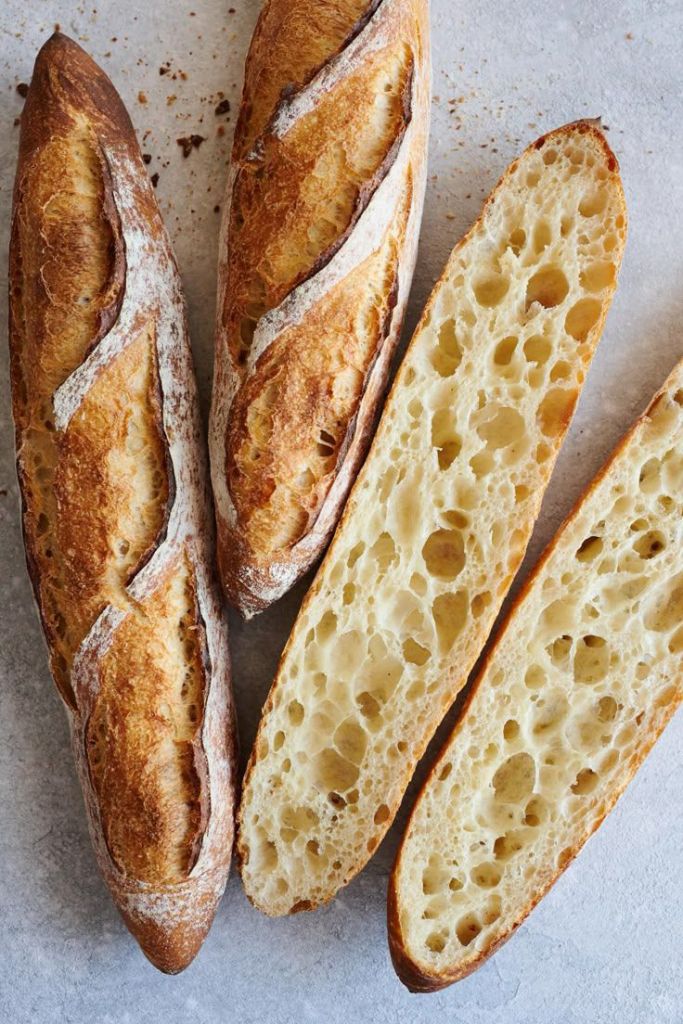
A baguette is a long, thin French loaf known for its crackly crust and airy crumb. The word baguette means “wand” or “stick,” and rightly so — it’s magical! 🪄
With just four ingredients — flour, water, salt, and yeast — this rustic loaf is a masterclass in simplicity and technique. Whether served fresh with Brandade de Morue, cheese, or just a slather of butter, it’s France on a plate.
Table of contents
- A Little French Bread History (Because This Loaf is Legendary)
- Ingredients – For 2 Classic French Baguettes
- Time Breakdown
- Step-by-Step: Traditional Baguette, Made Easy
- Baguette Troubleshooting – You’re Not Alone!
- Fun Variations to Try
- What to Serve with Fresh-Baked Baguette
- Bread Geek Moment: Why Steam is Everything
- Final Thoughts
There’s something magical about the sound of a crusty baguette cracking fresh from the oven. It’s rustic. It’s golden. It smells like a cozy Parisian morning, even if you’re in your pajamas halfway across the world.
With just four humble ingredients, this traditional French baguette recipe is a beginner-friendly way to master a true staple of French baking. Whether you’re pairing it with a creamy brandade de morue, dunking it in a warm bowl of French onion soup, or slathering it with good butter — this bread does it all.
Let’s bring boulangerie brilliance to your own kitchen — no passport required.
A Little French Bread History (Because This Loaf is Legendary)
Did you know the baguette is so iconic it’s protected by UNESCO? Yup — in 2022, the “artisanal know-how and culture of baguette bread” was added to the Intangible Cultural Heritage list. Why? Because baguette-making isn’t just a recipe — it’s a way of life. It reflects patience, technique, and daily ritual that’s deeply rooted in French identity.
📚 Read the full story on Food & Wine →
Ingredients – For 2 Classic French Baguettes
| Ingredient | Amount |
|---|---|
| Bread flour or all-purpose flour | 500 g (3⅓ cups) |
| Cool water | 350 ml (1½ cups) |
| Salt | 10 g (1¾ tsp) |
| Instant yeast | 2 g (½ tsp) |
💡 No instant yeast? Use 1 tsp of active dry yeast and dissolve it in a bit of the water.
💡 Gluten-free? You can swap in a strong gluten-free bread flour, but expect a denser loaf and gentler rise.
Time Breakdown
Its very important to rest the dough before baking to achieve the perfect crust and perfect inner texture. So make sure to rest and proof the dough before baking to achieve the real french bakery taste and aroma, texture.
| Stage | Time |
|---|---|
| Mix & autolyse | 30 minutes |
| Stretch & folds | Over 90 minutes |
| First rise | 2 hours |
| Final proof | 45–60 minutes |
| Bake time | 20–25 minutes |
| Total time | ~4–5 hours (or overnight proof for more flavor!) |
Step-by-Step: Traditional Baguette, Made Easy
1. Mix the Dough
In a big bowl, mix your flour, salt, and yeast. Add the water and stir until you get a shaggy, sticky dough. Cover and let it rest for 30 minutes — this process is called autolyse, and it lets the flour absorb water, making it easier to work with later.
2. Stretch & Fold (No Kneading Needed!)
Every 30 minutes for 90 minutes, do a quick stretch-and-fold: grab a side of the dough, stretch it up, and fold it over. Rotate and repeat. This strengthens the dough and builds structure without aggressive kneading.
3. Bulk Fermentation (Rise #1)
Cover the dough and let it rise for about 2 hours, or until it’s doubled in size and bubbly. It should look relaxed and a bit jiggly.
4. Divide & Shape the Loaves
Gently tip the dough onto a floured surface. Divide it into two equal pieces. Flatten each slightly, then roll into long logs (about 14 inches), tapering the ends slightly. Try not to deflate all that lovely air inside!
5. Final Proof (Rise #2)
Place the shaped loaves seam-side down on parchment or a floured towel. Cover and let proof for 45–60 minutes. They should puff slightly but still feel airy.
6. Preheat the Oven + Create Steam
Preheat to 220°C (445°F). Place a metal tray or cast iron pan at the bottom of your oven. When you add your baguettes, pour in hot water or toss in a few ice cubes to create steam — this gives you that crackly, shiny crust.
7. Score & Bake
Using a lame or sharp knife, make 3–5 quick diagonal slashes across each loaf. Slide them onto the hot baking sheet and bake for 20–25 minutes, until deeply golden with a crisp crust.
You’ll hear the crust crackle as it cools. That’s music to a baker’s ears.

Traditional French baguette recipe
Equipment
- Large mixing bowl
- Baking sheet or baguette pan
- Lame or razor blade For scoring
- Oven-proof tray For steam
Ingredients
- 500 g bread flour or T65 if available
- 365 ml cold water
- 10 g fine sea salt
- 2 g instant yeast ½ tsp
- 1/2 tsp a pinch of diastatic malt powder for color & flavor optional
Instructions
Mix & Rest
- In a bowl, mix flour, yeast, and cold water. Let rest for 30 minutes (autolyse). Then add salt and knead gently by hand or stretch and fold.
Stretch & Folds
- Do 3 sets of stretch & folds every 30 minutes. This strengthens gluten without kneading. Cover between sets.
- Skip the hand folding and let your mixer do the heavy lifting — perfect for busy bakers!1. Initial MixAdd flour, cold water, and yeast into the bowl of a stand mixer with a dough hook.Mix on low speed (Speed 1) for 2 minutes until combined.Let the dough rest for 20–30 minutes (autolyse) — this helps gluten develop naturally.2. Add Salt & KneadSprinkle in the salt (and malt powder if using).Mix on medium speed (Speed 2) for 6–8 minutes, or until the dough is smooth, elastic, and just slightly sticky.You should be able to pull a thin “windowpane” without tearing.
Cold Fermentation
- Cover bowl tightly and place in the fridge for 12 to 16 hours. This slow rise builds flavor and chew.
Divide & Preshape
- Next day, let dough warm 1 hour at room temp. Gently divide into 2–3 equal portions. Preshape into logs and rest 20 minutes.
Shape the Baguettes
- Roll each log into long baguette shapes, about 35–40 cm. Taper ends for that classic look.
Final Proof
- Place shaped baguettes on floured towel or parchment or a perforated baguette tray. Cover and rest 1 hour until puffy.
- Quick Fermentation process ( for fast method )Mix the dough in a stand mixer for 6–8 minutes until smooth and elastic.First rise: Cover and rest at room temp (ideally ~26–28°C) for 1.5 hours, folding once at the 45-minute mark.Shape into baguettes and let them rest (bench rest) for 20 minutes.Final proof: Cover loosely and let rise for 45–60 minutes until slightly puffy.Bake at 220°C with steam for 20–25 minutes.
- Pro Tips for Fast MethodUse warm water (not hot!) to jumpstart yeast activity.Ideal room temp: 26–28°C. If cold, place dough in a switched-off oven with the light on.Don’t skip the steam — it’s still key for that beautiful crust.
Preheat & Steam Setup
- Preheat oven to 220 degree celsius. Place a metal pan in bottom rack. Boil water separately.
Score & Bake
- Slash each baguette 3–5 times. Slide into oven, pour boiling water into hot pan to create steam. Bake 20–25 minutes until deeply golden and hollow-sounding when tapped.
Notes
- Use cold water to slow fermentation from the start.
- Don’t skip the steam—it’s key for a crackly crust.
- Malt powder helps browning and that subtle bakery flavor (optional).
- Use a baking steel or preheated tray for even bottom crust.
Baguette Troubleshooting – You’re Not Alone!
Why is my baguette flat and sad-looking?
👉 Most likely over-proofed or under-folded. Next time, shorten the final proof or add an extra stretch during rise #1.
Why isn’t my crust golden and crispy?
👉 Steam is key! No steam = no shine. Make sure your oven is hot enough and you’ve added that water or ice in the bottom tray.
Why is my bread gummy inside?
👉 It’s underbaked. Add 3–5 more minutes and check that your crust is firm and the loaf sounds hollow when tapped.
Why does it burst on the side instead of the top?
👉 Your scoring was too shallow or uneven. Be quick, firm, and slash at a 30° angle right before baking.
Fun Variations to Try
| Name | What’s Inside |
|---|---|
| Baguette aux céréales | Add sunflower, sesame, or flax seeds to the dough or top before baking. |
| Garlic Herb Baguette | Brush shaped dough with olive oil, minced garlic, and herbs before baking. |
| Mini Demi-Baguettes | Make smaller loaves — perfect for sliders or side servings. |
| Baguette Viennoise | Add milk, butter, and a bit of sugar for a soft, sweet sandwich loaf. |
💬 Want to get creative? Try swirling in olives, caramelized onions, or rosemary for your own signature baguette style!
What to Serve with Fresh-Baked Baguette
- Brandade de Morue – That creamy garlic cod spread meets the perfect bread dipper.
- French Cheeses – Brie, Comté, Roquefort, chèvre… go full fromage mode.
- Tapenade or Pâté – For a Provençal apéro.
- Soups – French onion, lentil, pumpkin or tomato — perfect for dunking.
- Butter & radish – A truly Parisian snack that’s so simple, it’s genius.
Bread Geek Moment: Why Steam is Everything
Steam in the first 10 minutes of baking keeps the crust soft so the bread can fully expand. It also helps caramelize the starches, giving you that deep golden color and signature crackle.
No steam? Expect a dull, pale crust and less oven spring. Don’t skip it!
Final Thoughts
Baking a traditional French baguette is like learning a new language — strange at first, then suddenly, you’re fluent in crackle, crumb, and crust. It’s a rhythm of stretch, rest, rise, and bake. It’s slow. It’s soothing. And it’s delicious.
Once you hear that signature crunch and tear open the airy center, you’ll know: you made real bread. The kind of bread that doesn’t need anything on it — but somehow makes everything taste better.
So go on — roll up your sleeves, sprinkle some flour, and fall in love with the process. This isn’t just baking. It’s bread therapy.