Coral Tuile FAQ – Your Guide to Crispy Perfection!
Got coral tuile troubles? Don’t worry—we’re here to help you turn that lacy dream into a reality! Whether it’s too soggy, too oily, or just not behaving, we’ve got the solutions.
For the perfect bubbly texture, balance the oil-to-water ratio and make sure your pan is hot enough before pouring. If your tuile is sticking, let it cook fully before attempting to lift it—impatience is the real enemy here!
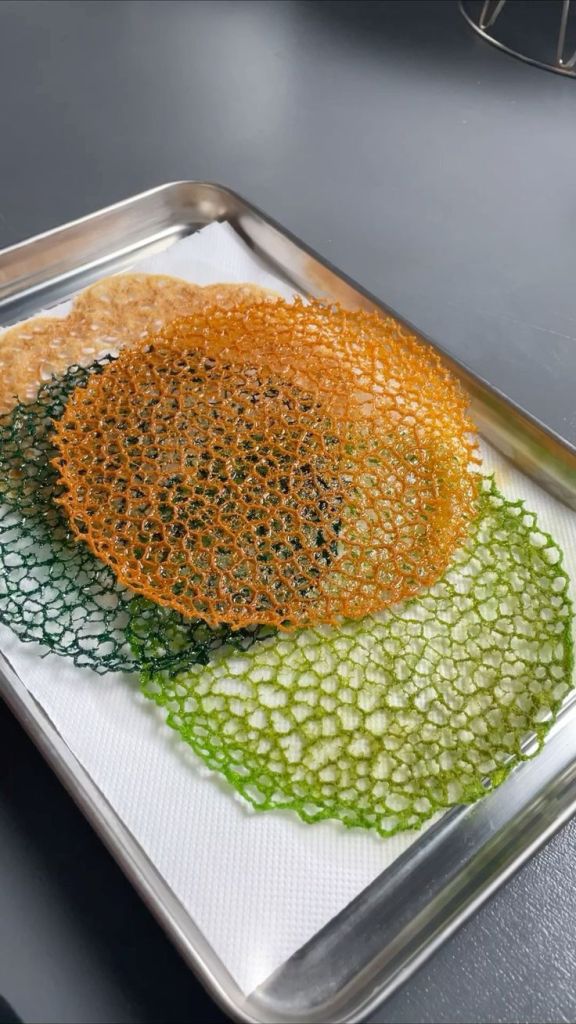
Want vibrant colors? Stick to gel or powder food coloring for bold results. Need a gluten-free alternative? Cornstarch or potato starch works like a charm. And if your tuiles are losing their crunch, an airtight container is the way to go!
With these tips, you’ll be making restaurant-worthy coral tuiles in no time! Happy cooking! 🍽✨
Coral tuile
Why does my tuile have uneven holes—some big, some small?
Problem: Your batter isn’t mixed properly, or the heat is inconsistent.
Solution: Stir your batter right before pouring, and make sure your pan is evenly heated.How do I make my coral tuile taste amazing instead of just looking pretty?
Solution: Add seasonings! Parmesan, garlic powder, truffle salt, or even a hint of sugar and cinnamon for a sweet twist.
an I bake coral tuile instead of frying?
Solution: Yes! Spread a thin layer on a silicone mat and bake at 300°F (150°C) until crisp. It won’t be as bubbly but still looks gorgeous.
My tuile batter separates—should I just embrace the chaos?
Problem: The oil and water are not emulsifying properly.
Solution: Whisk the batter vigorously before each pour to re-incorporate the ingredients!Why does my tuile lose its crunch after a while—how do I keep it crisp longer?
Solution: Moisture is the enemy! Store your tuiles in an airtight container with a silica gel packet (like the ones in snack bags) or a paper towel to absorb humidity.
How do I shape my coral tuile for dramatic plating without it cracking?
Solution: While it’s still warm, gently shape it over a rolling pin, bowl, or any curved mold. Once cooled, it will hold its shape like a crispy piece of edible art!
Can I make coral tuile without tapioca flour? What’s the magic substitute?
Solution: Yes! You can use cornstarch, potato starch, or even rice flour. Tapioca gives the best lacy texture, but cornstarch works well too!
Why is my coral tuile browning too fast while still being raw in the middle?
Problem: Your pan is too hot, or you’re using too much oil.
Solution: Lower the heat slightly and allow it to cook longer so the water can fully evaporate before it browns.My tuile keeps breaking—how do I make it delicate yet sturdy enough for plating?
Problem: Your tuile might be too thin, or you aren’t handling it carefully after cooling.
Solution: Try a slightly thicker batter and let the tuile cool completely before handling. They firm up as they sit!How do I get vibrant colors in my coral tuile without it looking like a science experiment?
Problem: Some food colorings dull after cooking, especially natural ones.
Solution: Use gel or powder food coloring for vibrant hues. If using natural colors (like beet or spirulina), add them after cooking by brushing on a light coat of edible paint.My tuile is turning out too oily—am I making a fancy lace or a deep-fried doily?
Problem: Either you used too much oil or didn’t let the tuile drain properly.
Solution: Stick to the right oil-to-water ratio and drain on a paper towel immediately after removing from the pan.Why is my coral tuile sticking to the pan like it’s fallen in love with it?
Problem: Your pan isn’t non-stick, or you aren’t giving the tuile enough time to naturally release.
Solution: Use a non-stick or well-seasoned pan, and be patient! The tuile will release on its own once it crisps up—don’t force it too early!Help! My tuile isn’t forming holes—it’s just a solid blob. What went wrong?
Problem: Either the oil-to-water ratio is off, or your pan isn’t hot enough. The magic of coral tuile is in the rapid bubbling, which forms the signature holes.
Solution: Increase the water content slightly and make sure the pan is hot-hot-hot before you pour the batter!Why does my coral tuile look more like a soggy pancake than a crispy lace masterpiece?
Problem: Too much liquid or not enough heat! If the batter is too watery, it won’t crisp up. Also, a low-temperature pan will make the tuile cook slowly and absorb oil instead of bubbling beautifully.
Solution: Reduce the water slightly and crank up the heat! The batter should sizzle and spread instantly when poured into the pan.


