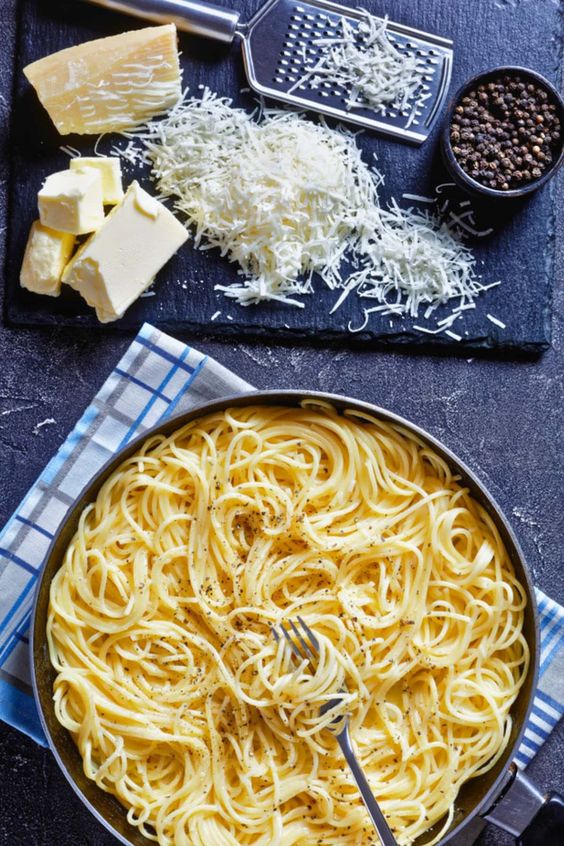
Cacio e pepe is a timeless classic that celebrates the beauty of simplicity in Italian cuisine. With its rich, creamy sauce and bold, peppery kick, it's a dish that delights the senses and satisfies the soul, embodying the essence of la dolce vita the sweet life that Italians hold dear.
Source: Pinterest ( Credits to respective owners / photographers )
If you’re a fan of no-fuss recipes that pack a punch, Cacio e Pepe (pronounced “KAH-choh eh PEH-peh”) is about to become your new best friend. Translating to “cheese and pepper,” this dish is proof that sometimes, less truly is more. With just three humble ingredients pasta, Pecorino Romano, and black pepper this Roman classic delivers a creamy, flavorful dish that feels far fancier than the effort it takes to make. Let’s dive into this timeless Italian treasure!
Cacio e Pepe has been a staple of Roman cuisine for centuries, tracing its roots to the shepherds of Lazio. They carried dried pasta, aged Pecorino Romano cheese, and black pepper all non-perishable ingredients as they traveled. What started as a practical meal evolved into a culinary masterpiece, loved worldwide for its rich simplicity. Each bite is a nod to the resourcefulness and ingenuity of Italian cooking.
Source: Pinterest ( Credits to respective owners / photographers )
Ingredients: Simplicity at Its Finest
The magic of Cacio e Pepe lies in its simplicity. You don’t need a fancy pantry; you just need the right ingredients:
Pasta: Spaghetti or tonnarelli are traditional, but bucatini or linguine work too.
Pecorino Romano: This salty, tangy sheep’s milk cheese is the star. Parmesan can be a backup, but it won’t give the same bold flavor.
Black Pepper: Freshly cracked pepper is essential for that signature kick.
That’s it. No cream, no butter just pure, unadulterated flavor.
How to Make Cacio e Pepe: Step-by-Step
1. Cook the Pasta Boil your pasta in salted water until just shy of al dente. Save some of that starchy pasta water it’s liquid gold for this recipe!
2. Toast the Pepper In a large skillet, toast freshly cracked black pepper over medium heat. This simple step unlocks its bold aroma and flavor.
3. Create the Sauce In a bowl, mix grated Pecorino Romano with a ladleful of hot pasta water. Stir until it forms a smooth, creamy paste. (Pro tip: Start with less water and add gradually to avoid clumps.)
4. Combine Everything Add the cooked pasta to the skillet with the toasted pepper. Reduce the heat and pour in the cheese sauce, tossing quickly to coat the pasta evenly. The residual heat will help the sauce cling perfectly.
5. Serve and Savor Plate your Cacio e Pepe immediately, garnishing with an extra sprinkle of Pecorino and a pinch of cracked pepper. Mangia!
Easy Cacio E Pepe Recipe
Cacio e Pepe is the ultimate comfort food from Rome—simple yet so elegant! 🍝✨ With just pasta, Pecorino Romano, and black pepper, it creates a creamy, cheesy, and peppery masterpiece in minutes. Perfect for a quick meal that’s bursting with bold, classic Italian flavors.
Ready to try this timeless dish? Check out the recipe and bring a taste of Rome to your plate!
Stock pot
Frying Pan
340 grams spaghetti or other long pasta
120 grams Pecorino Romano (Freshly Grated)
2 teaspoons freshly ground black pepper
Salt (for cooking pasta and seasoning)
Extra Pecorino Romano cheese (for serving )
Freshly chopped parsley (for garnish )
Bring a large pot of salted water to a boil. Cook the pasta according to the package instructions until al dente.
While the pasta is cooking, in a large skillet or saucepan, toast the freshly ground black pepper over medium heat for about 1-2 minutes until fragrant. Be careful not to burn it.
Once the pasta is cooked, reserve about 1 cup of pasta cooking water, then drain the pasta and set aside.
In the same skillet or saucepan with the toasted black pepper, add about 3/4 cup of the reserved pasta cooking water. Bring it to a simmer.
Gradually add the finely grated Pecorino Romano cheese to the simmering water, whisking constantly until it forms a smooth and creamy sauce. Add more pasta cooking water as needed to achieve the desired consistency.
Add the cooked pasta to the sauce in the skillet or saucepan. Toss well to coat the pasta evenly with the cheese and pepper sauce.
Taste and adjust the seasoning with salt if necessary. Remember that Pecorino Romano cheese is naturally salty, so be cautious with additional salt.
Serve the Cacio e Pepe immediately, garnished with extra Pecorino Romano cheese and freshly chopped parsley if desired.
Main Course
Italian
cacio e pepe, cacio e pepe recipe
Tips and Tricks for Perfect Cacio e Pepe
Use Fresh Ingredients: Pre-grated cheese or pre-ground pepper won’t cut it here. Go fresh for the best flavor.
Don’t Skimp on the Starch: That pasta water is the secret to a glossy sauce, so don’t throw it away!
Work Quickly: The sauce can seize up if the pasta cools down, so keep everything warm and move fast.
Experiment with Pasta: While spaghetti is the classic choice, thicker cuts like tonnarelli absorb the sauce beautifully.
Frequently asked questions
Why is my Cacio e Pepe clumpy or grainy?
It happens when the cheese gets too hot and seizes instead of emulsifying.
Here’s what usually goes wrong:
You added cheese directly to a hot pan.
The pasta water wasn’t starchy enough.
The temperature was too high.
Fix it like this:
Turn off the heat before adding cheese.
Let the pasta cool slightly for 30–60 seconds.
Add grated Pecorino gradually while tossing.
Use hot (not boiling) starchy pasta water to create the emulsion.
Remember: Cacio e Pepe is about controlling temperature, not blasting heat.
How do I make Cacio e Pepe creamy without cream?
Authentic Cacio e Pepe contains no cream.
The creaminess comes from:
Finely grated Pecorino Romano
Freshly cracked black pepper
Starchy pasta water
Constant tossing
That silky sauce? It’s an emulsion — cheese + starch + heat control.
If it’s not creamy, you likely:
Didn’t use enough pasta water
Used pre-shredded cheese (don’t)
Skipped vigorous tossing
The magic is in the movement.
What is the best pasta shape for Cacio e Pepe?
Traditional Roman versions use tonnarelli - a thick, square-cut pasta that holds sauce beautifully.
But spaghetti works perfectly at home.
The key is:
A pasta that releases starch
A surface that grips sauce
Avoid very smooth, slippery pasta - the sauce needs something to cling to.
Ready to bring a taste of Rome to your kitchen? Grab your ingredients and try this foolproof Cacio e Pepe recipe today. Buon appetito! Still having doubts and questions on the recipe, feel free to check out the FAQ section to clear your doubts
Keep things light and fresh to let the pasta shine:
A crisp, citrusy white wine like Pinot Grigio or Sauvignon Blanc.
A simple arugula salad with olive oil and lemon.
For dessert, a scoop of lemon sorbet or a classic tiramisu.
Why You’ll Love Cacio e Pepe
Cacio e Pepe is more than a recipe; it’s an experience. It’s the crackle of freshly ground pepper, the salty tang of Pecorino, and the satisfying twirl of perfectly coated pasta on your fork. It’s dinner on a busy weeknight, yet elegant enough for date night. And it’s a dish that celebrates the art of simplicity, one creamy, peppery bite at a time.
Cacio e Pepe: The Simplicity of Roman Perfection
Cacio e pepe is a timeless classic that celebrates the beauty of simplicity in Italian cuisine. With its rich, creamy sauce and bold, peppery kick, it's a dish that delights the senses and satisfies the soul, embodying the essence of la dolce vita the sweet life that Italians hold dear.
Source: Pinterest ( Credits to respective owners / photographers )
If you’re a fan of no-fuss recipes that pack a punch, Cacio e Pepe (pronounced “KAH-choh eh PEH-peh”) is about to become your new best friend. Translating to “cheese and pepper,” this dish is proof that sometimes, less truly is more. With just three humble ingredients pasta, Pecorino Romano, and black pepper this Roman classic delivers a creamy, flavorful dish that feels far fancier than the effort it takes to make. Let’s dive into this timeless Italian treasure!
Cacio e Pepe has been a staple of Roman cuisine for centuries, tracing its roots to the shepherds of Lazio. They carried dried pasta, aged Pecorino Romano cheese, and black pepper all non-perishable ingredients as they traveled. What started as a practical meal evolved into a culinary masterpiece, loved worldwide for its rich simplicity. Each bite is a nod to the resourcefulness and ingenuity of Italian cooking.
Source: Pinterest ( Credits to respective owners / photographers )
Ingredients: Simplicity at Its Finest
The magic of Cacio e Pepe lies in its simplicity. You don’t need a fancy pantry; you just need the right ingredients:
Pasta: Spaghetti or tonnarelli are traditional, but bucatini or linguine work too.
Pecorino Romano: This salty, tangy sheep’s milk cheese is the star. Parmesan can be a backup, but it won’t give the same bold flavor.
Black Pepper: Freshly cracked pepper is essential for that signature kick.
That’s it. No cream, no butter just pure, unadulterated flavor.
How to Make Cacio e Pepe: Step-by-Step
1. Cook the Pasta Boil your pasta in salted water until just shy of al dente. Save some of that starchy pasta water it’s liquid gold for this recipe!
2. Toast the Pepper In a large skillet, toast freshly cracked black pepper over medium heat. This simple step unlocks its bold aroma and flavor.
3. Create the Sauce In a bowl, mix grated Pecorino Romano with a ladleful of hot pasta water. Stir until it forms a smooth, creamy paste. (Pro tip: Start with less water and add gradually to avoid clumps.)
4. Combine Everything Add the cooked pasta to the skillet with the toasted pepper. Reduce the heat and pour in the cheese sauce, tossing quickly to coat the pasta evenly. The residual heat will help the sauce cling perfectly.
5. Serve and Savor Plate your Cacio e Pepe immediately, garnishing with an extra sprinkle of Pecorino and a pinch of cracked pepper. Mangia!
Easy Cacio E Pepe Recipe
Cacio e Pepe is the ultimate comfort food from Rome—simple yet so elegant! 🍝✨ With just pasta, Pecorino Romano, and black pepper, it creates a creamy, cheesy, and peppery masterpiece in minutes. Perfect for a quick meal that’s bursting with bold, classic Italian flavors.
Ready to try this timeless dish? Check out the recipe and bring a taste of Rome to your plate!
Stock pot
Frying Pan
340 grams spaghetti or other long pasta
120 grams Pecorino Romano (Freshly Grated)
2 teaspoons freshly ground black pepper
Salt (for cooking pasta and seasoning)
Extra Pecorino Romano cheese (for serving )
Freshly chopped parsley (for garnish )
Bring a large pot of salted water to a boil. Cook the pasta according to the package instructions until al dente.
While the pasta is cooking, in a large skillet or saucepan, toast the freshly ground black pepper over medium heat for about 1-2 minutes until fragrant. Be careful not to burn it.
Once the pasta is cooked, reserve about 1 cup of pasta cooking water, then drain the pasta and set aside.
In the same skillet or saucepan with the toasted black pepper, add about 3/4 cup of the reserved pasta cooking water. Bring it to a simmer.
Gradually add the finely grated Pecorino Romano cheese to the simmering water, whisking constantly until it forms a smooth and creamy sauce. Add more pasta cooking water as needed to achieve the desired consistency.
Add the cooked pasta to the sauce in the skillet or saucepan. Toss well to coat the pasta evenly with the cheese and pepper sauce.
Taste and adjust the seasoning with salt if necessary. Remember that Pecorino Romano cheese is naturally salty, so be cautious with additional salt.
Serve the Cacio e Pepe immediately, garnished with extra Pecorino Romano cheese and freshly chopped parsley if desired.
Main Course
Italian
cacio e pepe, cacio e pepe recipe
Tips and Tricks for Perfect Cacio e Pepe
Use Fresh Ingredients: Pre-grated cheese or pre-ground pepper won’t cut it here. Go fresh for the best flavor.
Don’t Skimp on the Starch: That pasta water is the secret to a glossy sauce, so don’t throw it away!
Work Quickly: The sauce can seize up if the pasta cools down, so keep everything warm and move fast.
Experiment with Pasta: While spaghetti is the classic choice, thicker cuts like tonnarelli absorb the sauce beautifully.
Frequently asked questions
Why is my Cacio e Pepe clumpy or grainy?
It happens when the cheese gets too hot and seizes instead of emulsifying.
Here’s what usually goes wrong:
You added cheese directly to a hot pan.
The pasta water wasn’t starchy enough.
The temperature was too high.
Fix it like this:
Turn off the heat before adding cheese.
Let the pasta cool slightly for 30–60 seconds.
Add grated Pecorino gradually while tossing.
Use hot (not boiling) starchy pasta water to create the emulsion.
Remember: Cacio e Pepe is about controlling temperature, not blasting heat.
How do I make Cacio e Pepe creamy without cream?
Authentic Cacio e Pepe contains no cream.
The creaminess comes from:
Finely grated Pecorino Romano
Freshly cracked black pepper
Starchy pasta water
Constant tossing
That silky sauce? It’s an emulsion — cheese + starch + heat control.
If it’s not creamy, you likely:
Didn’t use enough pasta water
Used pre-shredded cheese (don’t)
Skipped vigorous tossing
The magic is in the movement.
What is the best pasta shape for Cacio e Pepe?
Traditional Roman versions use tonnarelli - a thick, square-cut pasta that holds sauce beautifully.
But spaghetti works perfectly at home.
The key is:
A pasta that releases starch
A surface that grips sauce
Avoid very smooth, slippery pasta - the sauce needs something to cling to.
Ready to bring a taste of Rome to your kitchen? Grab your ingredients and try this foolproof Cacio e Pepe recipe today. Buon appetito! Still having doubts and questions on the recipe, feel free to check out the FAQ section to clear your doubts
Keep things light and fresh to let the pasta shine:
A crisp, citrusy white wine like Pinot Grigio or Sauvignon Blanc.
A simple arugula salad with olive oil and lemon.
For dessert, a scoop of lemon sorbet or a classic tiramisu.
Why You’ll Love Cacio e Pepe
Cacio e Pepe is more than a recipe; it’s an experience. It’s the crackle of freshly ground pepper, the salty tang of Pecorino, and the satisfying twirl of perfectly coated pasta on your fork. It’s dinner on a busy weeknight, yet elegant enough for date night. And it’s a dish that celebrates the art of simplicity, one creamy, peppery bite at a time.