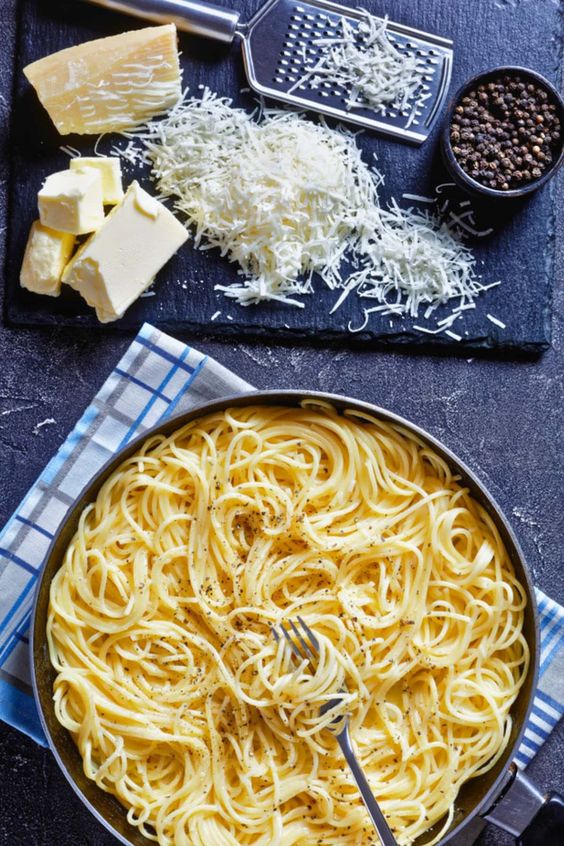
Cacio e Pepe is one of those dishes that makes you wonder, “How can something so simple be so delicious?” Whether you’re a first-timer or a pasta pro, this FAQ has everything you need to know about the iconic Roman dish.
Three ingredients.
That’s it.
No cream. No garlic. No butter. No decoration.
Just pasta, Pecorino Romano, and black pepper brought together with technique. And if you’ve ever tried making it, you already know: simple doesn’t mean easy.
Cacio e Pepe isn’t just a pasta dish. It’s a lesson in balance, heat control, and understanding how ingredients behave.
If you want to try out the classic recipe check out here
Avoid pre-grated cheese. It won’t emulsify properly.
Can I use pre-ground pepper?
Technically yes.
But freshly cracked black pepper makes a massive difference. It’s not background seasoning — it’s a star ingredient.
Can I add butter?
You can, but then it’s no longer traditional Cacio e Pepe.
What to Serve with Cacio e Pepe
It’s bold and salty - so balance it.
Great pairings:
Simple arugula salad with lemon vinaigrette
Roasted asparagus
Grilled zucchini
Light white wine (like Pinot Grigio)
Sparkling water with lemon
Keep sides light. Let the pasta shine.
Source: Pinterest ( Credits to respective owners / Photographers )
Frequently Asked Questions About Cacio e Pepe
Why is my Cacio e Pepe clumpy?
This usually happens when the cheese gets too hot and seizes instead of emulsifying. Pecorino Romano melts differently than cream-based sauces, it needs gentle heat.
If you add cheese directly to a very hot pan, it tightens and forms clumps.
How to fix it:
Turn off the heat before adding cheese.
Let pasta cool slightly for 30–60 seconds.
Add finely grated cheese gradually.
Toss continuously with warm (not boiling) pasta water.
Temperature control is everything.
Why is my Cacio e Pepe dry and grainy?
Grainy texture is almost always caused by overheating the cheese or using cheese that isn’t finely grated.
Pre-grated cheese also contains anti-caking agents that prevent smooth melting.
For a silky texture:
Grate Pecorino very finely (microplane works best).
Add it slowly while tossing.
Never let the pan stay on direct high heat.
Smooth sauce = proper emulsification.
What is the best pasta shape for Cacio e Pepe?
Traditionally, Romans use tonnarelli, a thick, square-cut pasta that holds sauce beautifully.
At home, spaghetti works perfectly.
The most important factor is starch release. Rough-surfaced pasta grips sauce better than ultra-smooth varieties.
Good options:
Tonnarelli
Spaghetti
Bucatini
Avoid very thin pasta, it doesn’t hold the sauce as well.
How do I make Cacio e Pepe creamy without adding cream?
Authentic Cacio e Pepe contains no cream. The creaminess comes from an emulsion created by combining:
Finely grated Pecorino Romano
Freshly cracked black pepper
Starchy pasta water
The starch in the pasta water binds with the fat in the cheese to create a naturally creamy sauce.
If it’s not creamy, you likely:
Didn’t use enough pasta water.
Didn’t toss vigorously.
Used low-starch pasta.
The movement and timing matter more than extra ingredients.
Why is my Cacio e Pepe too salty?
Pecorino Romano is naturally salty, and pasta water contains salt as well.
If your sauce tastes overly salty:
Reduce the amount of salt in the boiling water slightly.
Use a mix of Pecorino and Parmigiano to balance sharpness.
Avoid adding extra salt before tasting.
Remember, the cheese already carries salt.
Can I make Cacio e Pepe ahead of time?
It’s best served immediately.
Cacio e Pepe relies on a fresh emulsion. As it sits, the sauce tightens and loses its silkiness.
If you must reheat:
Add a splash of warm water.
Heat gently over low heat.
Stir continuously.
Never microwave aggressively, it will break the sauce.
Why does my sauce break or separate?
Sauce separation happens when there’s too much heat or too little starch.
If the fat from the cheese separates from the water, the emulsion fails.
To prevent this:
Use enough pasta water.
Keep heat low or off when mixing.
Toss continuously.
Think gentle, controlled, steady.
Can I use Parmesan instead of Pecorino Romano?
Yes, but the flavor changes.
Parmigiano Reggiano is milder and nuttier, while Pecorino Romano is sharper and saltier.
For a balanced flavor, many cooks use a 50/50 mix.
If you want authentic Roman flavor, stick to Pecorino.
Why is my Cacio e Pepe bland?
This dish relies on only a few ingredients, so quality matters.
Common reasons for blandness:
Not enough freshly cracked black pepper.
Using mild cheese.
Not enough salt in pasta water.
Insufficient marination of pepper in the pan.
Pepper is not just garnish, it’s a main flavor component.
Is Cacio e Pepe healthy?
It’s simple but rich.
It contains:
Cheese (protein + fat)
Pasta (carbohydrates)
No cream or butter traditionally
Portion control makes it balanced, but it’s not a “light” dish. Think of it as minimalist comfort food - rich, satisfying, and best enjoyed mindfully.
Cacio e Pepe is one of those dishes that makes you wonder, “How can something so simple be so delicious?” Whether you’re a first-timer or a pasta pro, this FAQ has everything you need to know about the iconic Roman dish.
Three ingredients.
That’s it.
No cream. No garlic. No butter. No decoration.
Just pasta, Pecorino Romano, and black pepper brought together with technique. And if you’ve ever tried making it, you already know: simple doesn’t mean easy.
Cacio e Pepe isn’t just a pasta dish. It’s a lesson in balance, heat control, and understanding how ingredients behave.
If you want to try out the classic recipe check out here
Avoid pre-grated cheese. It won’t emulsify properly.
Can I use pre-ground pepper?
Technically yes.
But freshly cracked black pepper makes a massive difference. It’s not background seasoning — it’s a star ingredient.
Can I add butter?
You can, but then it’s no longer traditional Cacio e Pepe.
What to Serve with Cacio e Pepe
It’s bold and salty - so balance it.
Great pairings:
Simple arugula salad with lemon vinaigrette
Roasted asparagus
Grilled zucchini
Light white wine (like Pinot Grigio)
Sparkling water with lemon
Keep sides light. Let the pasta shine.
Source: Pinterest ( Credits to respective owners / Photographers )
Frequently Asked Questions About Cacio e Pepe
Why is my Cacio e Pepe clumpy?
This usually happens when the cheese gets too hot and seizes instead of emulsifying. Pecorino Romano melts differently than cream-based sauces, it needs gentle heat.
If you add cheese directly to a very hot pan, it tightens and forms clumps.
How to fix it:
Turn off the heat before adding cheese.
Let pasta cool slightly for 30–60 seconds.
Add finely grated cheese gradually.
Toss continuously with warm (not boiling) pasta water.
Temperature control is everything.
Why is my Cacio e Pepe dry and grainy?
Grainy texture is almost always caused by overheating the cheese or using cheese that isn’t finely grated.
Pre-grated cheese also contains anti-caking agents that prevent smooth melting.
For a silky texture:
Grate Pecorino very finely (microplane works best).
Add it slowly while tossing.
Never let the pan stay on direct high heat.
Smooth sauce = proper emulsification.
What is the best pasta shape for Cacio e Pepe?
Traditionally, Romans use tonnarelli, a thick, square-cut pasta that holds sauce beautifully.
At home, spaghetti works perfectly.
The most important factor is starch release. Rough-surfaced pasta grips sauce better than ultra-smooth varieties.
Good options:
Tonnarelli
Spaghetti
Bucatini
Avoid very thin pasta, it doesn’t hold the sauce as well.
How do I make Cacio e Pepe creamy without adding cream?
Authentic Cacio e Pepe contains no cream. The creaminess comes from an emulsion created by combining:
Finely grated Pecorino Romano
Freshly cracked black pepper
Starchy pasta water
The starch in the pasta water binds with the fat in the cheese to create a naturally creamy sauce.
If it’s not creamy, you likely:
Didn’t use enough pasta water.
Didn’t toss vigorously.
Used low-starch pasta.
The movement and timing matter more than extra ingredients.
Why is my Cacio e Pepe too salty?
Pecorino Romano is naturally salty, and pasta water contains salt as well.
If your sauce tastes overly salty:
Reduce the amount of salt in the boiling water slightly.
Use a mix of Pecorino and Parmigiano to balance sharpness.
Avoid adding extra salt before tasting.
Remember, the cheese already carries salt.
Can I make Cacio e Pepe ahead of time?
It’s best served immediately.
Cacio e Pepe relies on a fresh emulsion. As it sits, the sauce tightens and loses its silkiness.
If you must reheat:
Add a splash of warm water.
Heat gently over low heat.
Stir continuously.
Never microwave aggressively, it will break the sauce.
Why does my sauce break or separate?
Sauce separation happens when there’s too much heat or too little starch.
If the fat from the cheese separates from the water, the emulsion fails.
To prevent this:
Use enough pasta water.
Keep heat low or off when mixing.
Toss continuously.
Think gentle, controlled, steady.
Can I use Parmesan instead of Pecorino Romano?
Yes, but the flavor changes.
Parmigiano Reggiano is milder and nuttier, while Pecorino Romano is sharper and saltier.
For a balanced flavor, many cooks use a 50/50 mix.
If you want authentic Roman flavor, stick to Pecorino.
Why is my Cacio e Pepe bland?
This dish relies on only a few ingredients, so quality matters.
Common reasons for blandness:
Not enough freshly cracked black pepper.
Using mild cheese.
Not enough salt in pasta water.
Insufficient marination of pepper in the pan.
Pepper is not just garnish, it’s a main flavor component.
Is Cacio e Pepe healthy?
It’s simple but rich.
It contains:
Cheese (protein + fat)
Pasta (carbohydrates)
No cream or butter traditionally
Portion control makes it balanced, but it’s not a “light” dish. Think of it as minimalist comfort food - rich, satisfying, and best enjoyed mindfully.