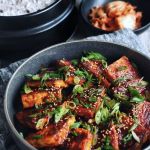
You know that moment when tofu goes from meh to “wait… I need more of this”? That’s dubu jorim - golden tofu slices that soak up a bold, savory-spicy glaze and quietly become the star of the table.
Dubu jorim comes from Korean home cooking — part of the everyday banchan (small side dishes) that accompany rice. It reflects a core idea in Korean cuisine: 👉 simple ingredients, layered flavor, balanced meals
Historically, tofu (dubu) has been a staple protein in Korea, especially in Buddhist-influenced cooking where plant-based dishes are common.
Source: Pinterest ( Credits to respective owners/ photographers )
Flavor Profile (Why It Works)
Savory → soy sauce
Spicy → gochugaru
Nutty → sesame oil
Aromatic → garlic
👉 It’s bold but balanced - designed to pair with plain rice.
Why This Recipe Works (Chef Insight)
Frying = structure + texture
Braising = absorption + depth
Reduction = intensity
👉 Skip one step → you lose the magic.
Recipe for Dubu Jorim
Authentic Dubu Jorim (Korean Braised Tofu)
A classic Korean banchan made with pan-fried tofu braised in a savory, slightly spicy soy-garlic sauce. Crispy on the outside, soft inside, and deeply flavorful - this is everyday Korean comfort food done right.
Main:
400 g firm or extra-firm tofu
15 ml neutral oil (sunflower/vegetable)
Braising Sauce:
2 tbsp soy sauce
1 tbsp gochugaru (Korean chili flakes)
1 tsp sugar
2 tbsp water
2 cloves garlic (finely minced)
1 tsp sesame oil (finish)
Optional Add-ins (Traditional Variations):
2-3 tbsp sliced onions
1-2 green chilies (for heat)
Garnish:
1-2 spring onions (chopped)
1 tsp toasted sesame seeds
Step 1: Prepare the tofu
Remove tofu from packaging and drain excess water.
Slice into 1–1.5 cm thick rectangles.
Pat dry thoroughly using paper towels.
👉 Dry tofu = better browning and texture
Step 2: Pan-fry the tofu
Heat oil in a non-stick or cast iron pan over medium heat.
Add tofu in a single layer (don’t overcrowd).
Cook 3–4 minutes per side until golden and lightly crisp.
👉 Avoid flipping too early — let a crust form
Step 3: Make the sauce
In a bowl, mix: Soy sauce, Gochugaru, Sugar, Water, Garlic
👉 Taste - it should be slightly salty, spicy, and balanced
Step 4: Braise the tofu
Reduce heat to medium-low.
Pour sauce evenly over tofu.
Add onions/chilies if using.
Simmer for 5–7 minutes, spooning sauce over tofu repeatedly.
👉 Sauce should reduce slightly and coat tofu
Step 5: Finish
Drizzle sesame oil over the tofu (off heat).
Garnish with spring onions and sesame seeds.
Do not skip frying → essential for texture
Don’t overcook tofu → it becomes dry
Sauce should be lightly reduced, not fully thickened
Sesame oil is added at the end to preserve aroma
Let tofu sit in sauce for 5 minutes before serving → better absorption
Substitutions & Smart Swaps
Sauce Adjustments
Soy sauce → tamari (gluten-free)
Sugar → honey or maple syrup
Gochugaru → chili flakes (less authentic but works)
Heat Control
Mild → reduce chili flakes
Spicy → add gochujang (thicker, deeper heat)
Protein & Add-ins
Add mushrooms → extra umami
Add onions → sweetness
Add zucchini → softer texture
👉 You can stretch this dish without losing its soul.
Difference: Dubu Jorim vs Similar Tofu Dishes
Dish
Technique
Flavor Profile
Dubu Jorim
Fried + braised
Savory, spicy, balanced
Mapo Tofu (Chinese)
Simmered in sauce
Spicy, numbing, oily
Agedashi Tofu (Japanese)
Deep-fried + broth
Light, delicate
👉 Dubu jorim sits right in the middle - bold but not heavy
What to Serve With Dubu Jorim
Source: Pinterest ( Credits to respective owners/ photographers )
Steamed rice (essential)
Kimchi
Stir-fried greens
Fried egg or grilled meats
👉 It’s best as part of a balanced Korean meal spread
You know that moment when tofu goes from meh to “wait… I need more of this”? That’s dubu jorim - golden tofu slices that soak up a bold, savory-spicy glaze and quietly become the star of the table.
Dubu jorim comes from Korean home cooking — part of the everyday banchan (small side dishes) that accompany rice. It reflects a core idea in Korean cuisine: 👉 simple ingredients, layered flavor, balanced meals
Historically, tofu (dubu) has been a staple protein in Korea, especially in Buddhist-influenced cooking where plant-based dishes are common.
Source: Pinterest ( Credits to respective owners/ photographers )
Flavor Profile (Why It Works)
Savory → soy sauce
Spicy → gochugaru
Nutty → sesame oil
Aromatic → garlic
👉 It’s bold but balanced - designed to pair with plain rice.
Why This Recipe Works (Chef Insight)
Frying = structure + texture
Braising = absorption + depth
Reduction = intensity
👉 Skip one step → you lose the magic.
Recipe for Dubu Jorim
Authentic Dubu Jorim (Korean Braised Tofu)
A classic Korean banchan made with pan-fried tofu braised in a savory, slightly spicy soy-garlic sauce. Crispy on the outside, soft inside, and deeply flavorful - this is everyday Korean comfort food done right.
Main:
400 g firm or extra-firm tofu
15 ml neutral oil (sunflower/vegetable)
Braising Sauce:
2 tbsp soy sauce
1 tbsp gochugaru (Korean chili flakes)
1 tsp sugar
2 tbsp water
2 cloves garlic (finely minced)
1 tsp sesame oil (finish)
Optional Add-ins (Traditional Variations):
2-3 tbsp sliced onions
1-2 green chilies (for heat)
Garnish:
1-2 spring onions (chopped)
1 tsp toasted sesame seeds
Step 1: Prepare the tofu
Remove tofu from packaging and drain excess water.
Slice into 1–1.5 cm thick rectangles.
Pat dry thoroughly using paper towels.
👉 Dry tofu = better browning and texture
Step 2: Pan-fry the tofu
Heat oil in a non-stick or cast iron pan over medium heat.
Add tofu in a single layer (don’t overcrowd).
Cook 3–4 minutes per side until golden and lightly crisp.
👉 Avoid flipping too early — let a crust form
Step 3: Make the sauce
In a bowl, mix: Soy sauce, Gochugaru, Sugar, Water, Garlic
👉 Taste - it should be slightly salty, spicy, and balanced
Step 4: Braise the tofu
Reduce heat to medium-low.
Pour sauce evenly over tofu.
Add onions/chilies if using.
Simmer for 5–7 minutes, spooning sauce over tofu repeatedly.
👉 Sauce should reduce slightly and coat tofu
Step 5: Finish
Drizzle sesame oil over the tofu (off heat).
Garnish with spring onions and sesame seeds.
Do not skip frying → essential for texture
Don’t overcook tofu → it becomes dry
Sauce should be lightly reduced, not fully thickened
Sesame oil is added at the end to preserve aroma
Let tofu sit in sauce for 5 minutes before serving → better absorption
Substitutions & Smart Swaps
Sauce Adjustments
Soy sauce → tamari (gluten-free)
Sugar → honey or maple syrup
Gochugaru → chili flakes (less authentic but works)
Heat Control
Mild → reduce chili flakes
Spicy → add gochujang (thicker, deeper heat)
Protein & Add-ins
Add mushrooms → extra umami
Add onions → sweetness
Add zucchini → softer texture
👉 You can stretch this dish without losing its soul.
Difference: Dubu Jorim vs Similar Tofu Dishes
Dish
Technique
Flavor Profile
Dubu Jorim
Fried + braised
Savory, spicy, balanced
Mapo Tofu (Chinese)
Simmered in sauce
Spicy, numbing, oily
Agedashi Tofu (Japanese)
Deep-fried + broth
Light, delicate
👉 Dubu jorim sits right in the middle - bold but not heavy
What to Serve With Dubu Jorim
Source: Pinterest ( Credits to respective owners/ photographers )
Steamed rice (essential)
Kimchi
Stir-fried greens
Fried egg or grilled meats
👉 It’s best as part of a balanced Korean meal spread