The first Victoria sponge I ever tasted wasn’t in a fancy café or a tea room – it was at a friend’s kitchen table. I remember biting into it and being surprised by how simple yet perfect it was: fluffy sponge, jam that oozed just enough, and a cloud of cream in the middle. No fuss, no over-decoration — just cake doing what cake does best.
The first time I baked one myself, though… let’s just say my sponge came out more like a brick than a pillow. Too much flour, too little folding. But the thing with Victoria sponge is, once you master it, it becomes your reliable best friend. It’s the cake you can whip up for birthdays, afternoon teas, or even when you just need a slice of comfort with a cup of tea.
👉 What’s your “first sponge fail” story? (Come on, we’ve all had one!)
Table of contents
The Origin of the Victoria Sponge
The Victoria sponge cake is named after Queen Victoria, who was said to enjoy a slice with her afternoon tea in the mid-19th century. Originally, it was just a “plain sponge,” but when filled with jam and cream, it became the iconic British teatime staple we know today.
For a deeper look at its history, check out this piece on GRANTS

Recipe for victoria sponge
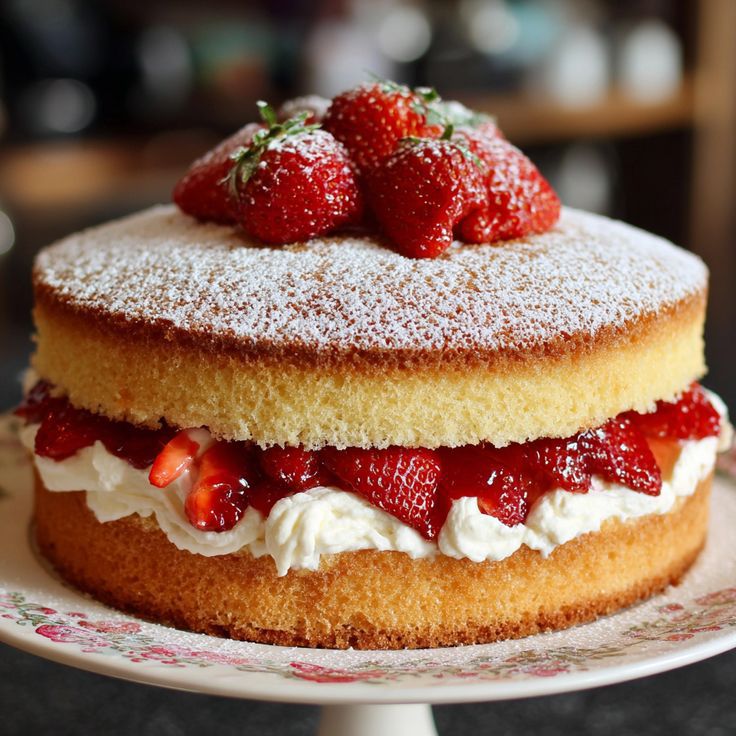
Classic Victoria Sponge recipe
Equipment
- Hand or stand mixer
- 2 x 20 cm (8-inch) round cake tin
- Parchment paper
- Cooling rack
Ingredients
- 200 g 1 cup unsalted butter, softened
- 200 g 1 cup caster sugar
- 4 large eggs room temperature
- 200 g 1 ½ cups self-raising flour, sifted
- 1 tsp baking powder
- 2 tbsp milk
- 1 tsp vanilla extract
- 100 g ½ cup strawberry or raspberry jam
- 150 ml ⅔ cup double cream, whipped (or buttercream)
- Icing sugar for dusting
Instructions
Prep your tins and oven
- Preheat oven to 180°C / 350°F (160°C fan / 325°F convection).
- Grease two 20 cm (8-inch) round tins with butter, then line the bottoms with parchment. This ensures your sponge never sticks.
Cream butter and sugar
- In a large bowl, beat butter and caster sugar together for 3–4 minutes until very pale and fluffy.200 g 1 cup caster sugar, 200 g 1 cup unsalted butter, softened
- This step is crucial: it traps air that will make your sponge light.
Add the eggs
- Beat eggs lightly in a cup.4 large eggs
- Add them gradually to the butter-sugar mixture, a little at a time, beating well after each addition.
- If the mix looks like it’s curdling, stir in 1 tablespoon of flour — it’ll bring it back together.
Fold in the dry ingredients
- Sift flour and baking powder together.1 tsp baking powder, 200 g 1 ½ cups self-raising flour, sifted
- Using a spatula or large spoon, gently fold flour into the mixture in two batches.
- Don’t overmix – stop as soon as no streaks of flour remain.
Add milk and vanilla
- Stir in milk and vanilla extract to loosen the batter to a soft dropping consistency (it should fall easily off a spoon, not stick stubbornly).2 tbsp milk, 1 tsp vanilla extract
Divide and bake
- Divide batter evenly between the tins. Smooth tops gently with the back of a spoon.
- Bake for 20–25 minutes, until golden brown and springy to the touch.
- Test with a skewer: it should come out clean.
Cool properly
- Leave cakes in tins for 5 minutes, then turn out onto a wire rack.
- Peel off parchment and let cool completely — filling too early makes cream melt and jam soak in.
Assemble the cake
- Place one sponge layer on a plate. Spread evenly with jam.
- Whip cream to soft peaks, then spread or pipe over jam.100 g ½ cup strawberry or raspberry jam, 150 ml ⅔ cup double cream, whipped (or buttercream)
- Gently place second sponge layer on top.
Finish with flair
- Dust top generously with icing sugar.Icing sugar
- Slice with a serrated knife for clean layers.
Notes
- Make ahead: Bake sponges a day early, wrap well, and fill just before serving.
- Flavor twist: Swap jam for lemon curd or passionfruit jelly.
- Dairy-free: Use plant-based butter and coconut cream.
- Extra fancy: Add fresh strawberries or raspberries between layers.
Serving Suggestions
- Afternoon tea with Earl Grey or Darjeeling
- With fresh berries on the side for extra freshness
- As a birthday cake with buttercream instead of cream
Nutrition
Variations and Substitutes
The classic Victoria sponge is made with equal parts butter, sugar, eggs, and flour, but bakers love to play with it:
- Chocolate Victoria Sponge – Swap part of the flour for cocoa powder.
- Lemon Sponge – Add zest and a lemon curd filling.
- Gluten-Free Sponge – Replace flour with a gluten-free blend.
- Dairy-Free Version – Use plant-based butter and cream alternatives.
- Fruit Variations – Add fresh raspberries, strawberries, or even peaches between layers.
Perfect Pairings
Victoria sponge is elegant in its simplicity, which makes it incredibly versatile. Serve it with:
- Afternoon tea (classic pairing, of course!)
- Fresh berries and whipped cream
- Custard on the side for a comforting dessert
- A glass of Prosecco for a modern twist
- Even coffee, if you’re not a tea drinker
👉 Tea or coffee with cake — which team are you on?
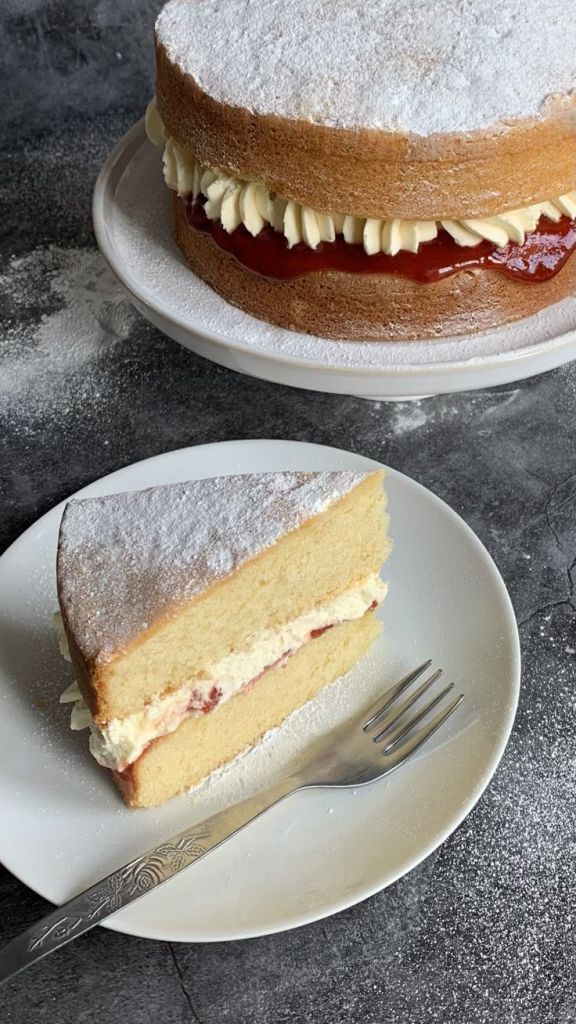
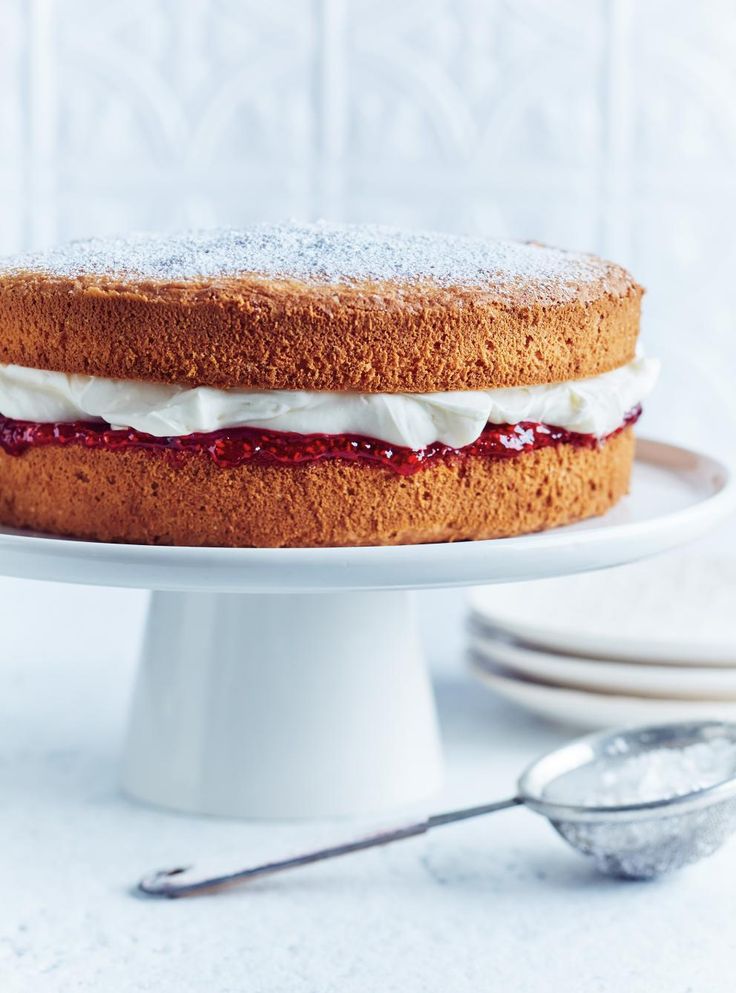
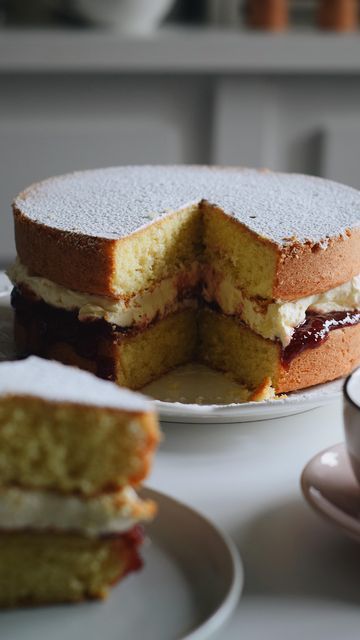
Difference Between Victoria Sponge and Other Sponges
Victoria Sponge vs. Genoise → Genoise relies on whipped eggs for lift, while Victoria sponge uses butter and baking powder.
If you are curious to learn how to make genoise sponge check below


Victoria Sponge vs. Chiffon → Chiffon is lighter, uses oil and egg whites; Victoria sponge is richer and buttery.
Victoria Sponge vs. Pound Cake → Pound cake is denser and heavier; Victoria sponge is lighter and fluffier.
Frequently asked questions
| Problem | Why It Happened | How to Fix It |
|---|---|---|
| My sponge is dense | Overmixed batter or too much flour | Cream butter & sugar well, fold flour gently |
| Cake sank in the middle | Oven door opened too soon or underbaked | Bake fully, don’t peek until ¾ time done |
| Top cracked | Oven too hot | Lower temp slightly, bake evenly |
| Sponge is dry | Overbaked or too little fat | Reduce bake time, don’t skimp on butter |
| Batter curdled | Eggs too cold | Bring eggs to room temperature |
| Uneven rise | Uneven oven heat | Rotate cake halfway through baking |
| Cake stuck to tin | No lining or greasing | Always line tins with parchment paper |
| Tastes eggy | Too many eggs or underbaked | Measure carefully, bake until just set |
| No golden color | Oven too cool | Preheat fully, bake at correct temperature |
| Filling soaked into sponge | Cake wasn’t fully cooled | Let sponge cool completely before filling |
Final Thoughts
The Victoria sponge may look simple, but that’s exactly why it’s a classic. It’s a cake that doesn’t need fancy decoration – just a perfect balance of fluffy sponge, sweet jam, and cream. Once you bake it right, it becomes your go-to cake for teatime, birthdays, or simply because it’s Tuesday and you deserve cake.
So, are you ready to bake your own Victoria sponge? And more importantly — will you fill it with jam and cream, or keep it traditional with just jam?