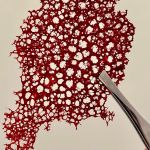
There’s something deeply satisfying about adding a vibrant beetroot tuile to a plate. I have struggled to achieve perfect holes in the tuile due to beetroot liquid being more heavier compared to normal water with oil, so this beetroot tuile recipe is my masterpiece.
Maybe it’s the dramatic color. Maybe it’s the delicate lace texture. Or maybe it’s because the second you place one on a dish, everyone suddenly assumes you trained under a very intense chef in Copenhagen.
Honestly? Fair enough.
Beetroot tuile is one of the easiest ways to add:
color
crisp texture
height
visual drama
without needing tweezers, edible flowers, or a full fine-dining identity crisis.
And unlike traditional pastry-based tuiles, this version belongs firmly in the modern plating world alongside creations like:
Beetroot Tuile Recipe – Crispy Red Garnish for Fine Dining
A vibrant, crispy beetroot tuile with delicate lace texture, perfect for modern plating, fine-dining presentation, and adding dramatic color contrast to savory dishes.
Non-stick pan
Small mixing bowl
Whisk
Paper towels
Offset spatula or palette knife
60 ml beetroot juice or smooth beetroot puree
40 ml water
40 ml neutral oil (sunflower or grapeseed)
15 g all-purpose flour
1 pinch salt
Step 1 – Prepare the Batter
In a bowl, whisk together: beetroot juice, water, oil, salt
Add flour and whisk until completely smooth.
The batter should be fluid and thin, similar to light cream.
Step 2 – Heat the Pan
Place a non-stick pan over medium heat.
Allow the pan to heat properly before adding the batter.
A properly heated pan is essential for forming the signature coral holes.
Step 3 – Cook the Tuile
Pour a small amount of batter into the center of the pan.
The batter will immediately begin bubbling as the water evaporates.
Allow it to cook undisturbed until: bubbling slows significantly, structure looks dry, edges release naturally
This usually takes 1–2 minutes.
Step 4 – Drain
Carefully remove the tuile using a spatula.
Transfer immediately to paper towels to remove excess oil.
Step 5 – Cool
Allow the tuile to cool completely before plating.
It will continue crisping as it cools.
Thin batter creates better lace patterns
Too much beetroot puree can make the tuile dense
Medium heat works better than aggressive high heat
Strain beetroot puree if fibrous for smoother texture
Storage
Store in an airtight container
Best enjoyed within a few hours
Re-crisp briefly in a low oven if softened
garnish, Gastronomy
Gastronomy
beetroot tuile recipe, crispy beetroot tuile garnish for plating, easy beetroot tuile recipe at home, fine dining beetroot garnish ideas, how to make beetroot tuile step by step, modern beetroot tuile technique, why is my beetroot tuile not crispy, beetroot coral tuile recipe
Common Beetroot Tuile Problems
Because yes, colorful disasters happen too.
Why Is My Beetroot Tuile Not Crispy?
Usually:
too much puree
excess moisture
undercooking
Beetroot naturally contains water, so controlling moisture is critical.
Beetroot tuile is one of those garnishes that instantly elevates a plate with surprisingly little effort.
It teaches:
color balance
texture control
modern plating instincts
And once you realize how dramatic a simple crispy garnish can make a dish look?
You start wanting to put tuiles on everything.
Which is how the obsession begins.
There’s something deeply satisfying about adding a vibrant beetroot tuile to a plate. I have struggled to achieve perfect holes in the tuile due to beetroot liquid being more heavier compared to normal water with oil, so this beetroot tuile recipe is my masterpiece.
Maybe it’s the dramatic color. Maybe it’s the delicate lace texture. Or maybe it’s because the second you place one on a dish, everyone suddenly assumes you trained under a very intense chef in Copenhagen.
Honestly? Fair enough.
Beetroot tuile is one of the easiest ways to add:
color
crisp texture
height
visual drama
without needing tweezers, edible flowers, or a full fine-dining identity crisis.
And unlike traditional pastry-based tuiles, this version belongs firmly in the modern plating world alongside creations like:
Beetroot Tuile Recipe – Crispy Red Garnish for Fine Dining
A vibrant, crispy beetroot tuile with delicate lace texture, perfect for modern plating, fine-dining presentation, and adding dramatic color contrast to savory dishes.
Non-stick pan
Small mixing bowl
Whisk
Paper towels
Offset spatula or palette knife
60 ml beetroot juice or smooth beetroot puree
40 ml water
40 ml neutral oil (sunflower or grapeseed)
15 g all-purpose flour
1 pinch salt
Step 1 – Prepare the Batter
In a bowl, whisk together: beetroot juice, water, oil, salt
Add flour and whisk until completely smooth.
The batter should be fluid and thin, similar to light cream.
Step 2 – Heat the Pan
Place a non-stick pan over medium heat.
Allow the pan to heat properly before adding the batter.
A properly heated pan is essential for forming the signature coral holes.
Step 3 – Cook the Tuile
Pour a small amount of batter into the center of the pan.
The batter will immediately begin bubbling as the water evaporates.
Allow it to cook undisturbed until: bubbling slows significantly, structure looks dry, edges release naturally
This usually takes 1–2 minutes.
Step 4 – Drain
Carefully remove the tuile using a spatula.
Transfer immediately to paper towels to remove excess oil.
Step 5 – Cool
Allow the tuile to cool completely before plating.
It will continue crisping as it cools.
Thin batter creates better lace patterns
Too much beetroot puree can make the tuile dense
Medium heat works better than aggressive high heat
Strain beetroot puree if fibrous for smoother texture
Storage
Store in an airtight container
Best enjoyed within a few hours
Re-crisp briefly in a low oven if softened
garnish, Gastronomy
Gastronomy
beetroot tuile recipe, crispy beetroot tuile garnish for plating, easy beetroot tuile recipe at home, fine dining beetroot garnish ideas, how to make beetroot tuile step by step, modern beetroot tuile technique, why is my beetroot tuile not crispy, beetroot coral tuile recipe
Common Beetroot Tuile Problems
Because yes, colorful disasters happen too.
Why Is My Beetroot Tuile Not Crispy?
Usually:
too much puree
excess moisture
undercooking
Beetroot naturally contains water, so controlling moisture is critical.