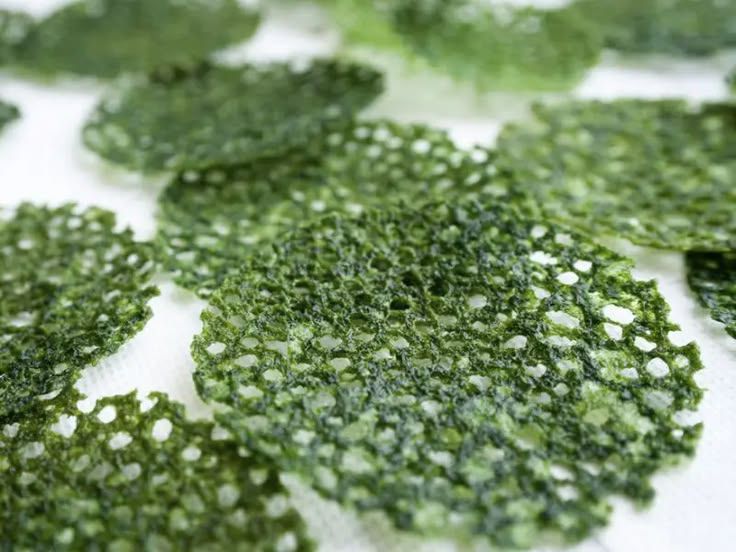
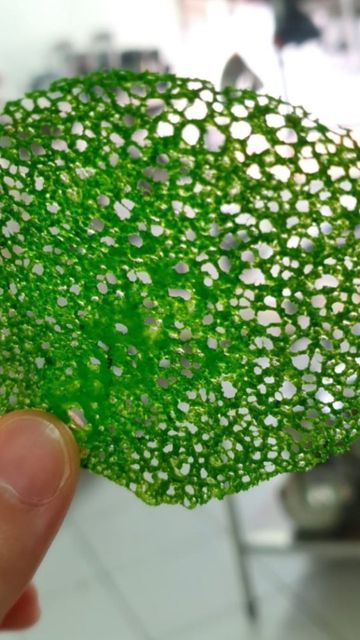
Add herb tuile? Suddenly it looks like the dish has ambition.
The Biggest Challenge With Green Herb Tuile
Color preservation.
Herbs are dramatic little ingredients.
Too much heat and your beautiful green turns:
swampy
dull
sad chef camouflage
The goal is vibrant freshness, not “overcooked spinach memory.” You can also use green Herb oil to make it even more interesting.
How to make green herb coral tuile
Green Herb Tuile Recipe
A light, crispy herb tuile with vibrant green color and delicate coral texture, ideal for modern restaurant plating and elegant savory presentations.
Blender
Fine strainer
Non-stick pan
Mixing bowl
Paper towels
50 ml herb puree (parsley, basil, spinach, or chives)
50 ml water
40 ml neutral oil (Can also use green herb oil)
15 g all-purpose flour
1 pinch salt
Step 1 – Blend the Herbs
Blend fresh herbs with water until smooth.
Strain if necessary for a cleaner texture.
Step 2 – Make the Batter
Whisk together: herb puree, oil, flour, salt
Mix until completely smooth and fluid.
Step 3 – Heat the Pan
Heat a non-stick pan over medium heat.
The pan should be hot enough for immediate bubbling but not smoking.
Step 4 – Cook the Tuile
Pour a small amount of batter into the pan.
Allow it to bubble and form its lace-like structure.
Cook until bubbling slows and the tuile looks dry and crisp.
Step 5 – Drain and Cool
Transfer to paper towels immediately.
Allow to cool fully before serving.
Fresh herbs produce brighter flavor and color
Spinach gives stronger green color with milder taste
Basil pairs beautifully with tomato dishes
Avoid overheating or herbs may darken
Storage
Store airtight away from humidity
Best served fresh
Reheat briefly to restore crispness if needed
garnish, Gastronomy
Gastronomy
basil tuile recipe for plating, crispy green coral tuile recipe, crispy herb tuile garnish for plating, green herb tuile recipe, how to make green herb tuile at home, parsley herb tuile recipe, vibrant green tuile garnish ideas
Common Green Herb Tuile Mistakes
Why Is My Herb Tuile Brown?
Usually:
excessive heat
overcooking
herbs oxidizing too quickly
Gentle control is everything.
Why Is My Herb Tuile Bitter?
Certain herbs become bitter when overheated.
Especially:
parsley
cilantro
Balance flavor carefully.
Why Is My Herb Tuile Not Crispy?
Too much herb puree often adds excess moisture.
Result:
floppy garnish sadness
Keep the batter fluid and balanced.
For more questions check out my detailed guide why my coral tuile is not restaurant worthy, because same mistakes and priciples apply in all tuiles just the flavor profile is different.
Add herb tuile? Suddenly it looks like the dish has ambition.
The Biggest Challenge With Green Herb Tuile
Color preservation.
Herbs are dramatic little ingredients.
Too much heat and your beautiful green turns:
swampy
dull
sad chef camouflage
The goal is vibrant freshness, not “overcooked spinach memory.” You can also use green Herb oil to make it even more interesting.
How to make green herb coral tuile
Green Herb Tuile Recipe
A light, crispy herb tuile with vibrant green color and delicate coral texture, ideal for modern restaurant plating and elegant savory presentations.
Blender
Fine strainer
Non-stick pan
Mixing bowl
Paper towels
50 ml herb puree (parsley, basil, spinach, or chives)
50 ml water
40 ml neutral oil (Can also use green herb oil)
15 g all-purpose flour
1 pinch salt
Step 1 – Blend the Herbs
Blend fresh herbs with water until smooth.
Strain if necessary for a cleaner texture.
Step 2 – Make the Batter
Whisk together: herb puree, oil, flour, salt
Mix until completely smooth and fluid.
Step 3 – Heat the Pan
Heat a non-stick pan over medium heat.
The pan should be hot enough for immediate bubbling but not smoking.
Step 4 – Cook the Tuile
Pour a small amount of batter into the pan.
Allow it to bubble and form its lace-like structure.
Cook until bubbling slows and the tuile looks dry and crisp.
Step 5 – Drain and Cool
Transfer to paper towels immediately.
Allow to cool fully before serving.
Fresh herbs produce brighter flavor and color
Spinach gives stronger green color with milder taste
Basil pairs beautifully with tomato dishes
Avoid overheating or herbs may darken
Storage
Store airtight away from humidity
Best served fresh
Reheat briefly to restore crispness if needed
garnish, Gastronomy
Gastronomy
basil tuile recipe for plating, crispy green coral tuile recipe, crispy herb tuile garnish for plating, green herb tuile recipe, how to make green herb tuile at home, parsley herb tuile recipe, vibrant green tuile garnish ideas
Common Green Herb Tuile Mistakes
Why Is My Herb Tuile Brown?
Usually:
excessive heat
overcooking
herbs oxidizing too quickly
Gentle control is everything.
Why Is My Herb Tuile Bitter?
Certain herbs become bitter when overheated.
Especially:
parsley
cilantro
Balance flavor carefully.
Why Is My Herb Tuile Not Crispy?
Too much herb puree often adds excess moisture.
Result:
floppy garnish sadness
Keep the batter fluid and balanced.
For more questions check out my detailed guide why my coral tuile is not restaurant worthy, because same mistakes and priciples apply in all tuiles just the flavor profile is different.