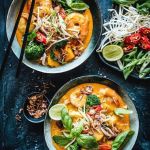
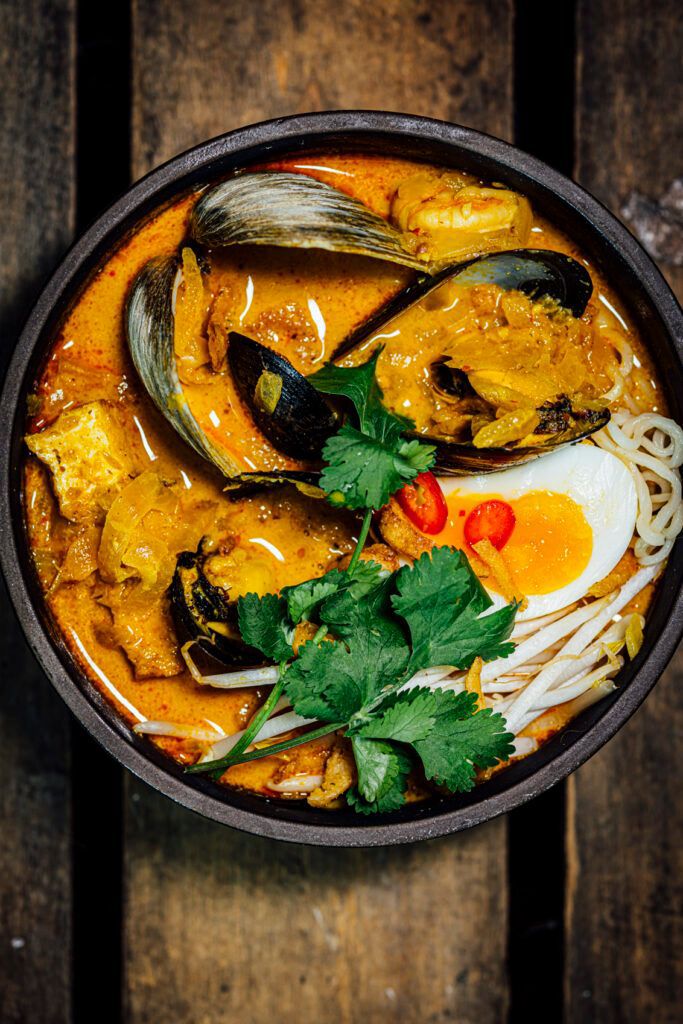
The kind of bowl ( seafood laksa ) that makes you pause mid-bite and go… okay, this is special.
There’s comfort food… and then there’s laksa - rich, spicy, coconutty, and layered with flavors that don’t just sit on your tongue, they build.
You get heat, sweetness, umami, freshness - all in one spoonful. And when seafood enters the picture? 👉 It turns into something ridiculously luxurious.
Seafood laksa is a Southeast Asian noodle soup built on:
A coconut curry broth
A fragrant spice paste
Rice noodles
Fresh seafood like shrimp, mussels, fish, or squid
It’s especially loved in Malaysia and Singapore, where laksa isn’t just food, it’s identity.
Source: Pinterest ( Credits to respective owners / photographers )
Flavor Profile (Why It Hits So Hard)
🥥 Creamy → coconut milk
🌶️ Spicy → chilies + paste
🦐 Umami → seafood + fish sauce
🍋 Fresh → lime + herbs
👉 The magic = balance. Too rich? It feels heavy. Too spicy? It loses depth. Get it right → restaurant-level wow.
Origin of Seafood laksa
Laksa is believed to have originated in the Peranakan (Nyonya) communities of Southeast Asia - a fusion culture formed by Chinese immigrants and local Malay traditions.
👉 Think of it as culinary blending at its finest:
Chinese noodles + techniques
Malay spices + herbs
The result? 👉 A dish that’s layered, complex, and totally unique.
What Makes a GREAT Laksa (Chef Truth)
The paste must be cooked properly (no raw taste)
Coconut milk should be gently simmered, not boiled
Seafood must be perfectly cooked — not rubbery
Final balance = salty + sweet + spicy + fresh
👉 Laksa isn’t hard… but it punishes shortcuts.
Key Ingredients Explained
Laksa Paste (Flavor Core)
Chilies → heat
Garlic + ginger → depth
Lemongrass → citrus aroma
Shrimp paste → umami punch
Coconut Milk
Gives body and richness 👉 Use full-fat for authentic flavor
Noodles
Rice noodles = best They absorb flavor without competing
Seafood
Shrimp → sweetness
Mussels/clams → ocean depth
Fish → soft texture
👉 Mix = complexity
Source: Pinterest ( Credits to respective owners / photographers )
Types of Laksa (Quick Breakdown)
Type
Base
Flavor
Curry Laksa
Coconut milk
Rich, creamy, spicy
Assam Laksa
Tamarind
Sour, fishy, lighter
👉 Seafood laksa usually = curry laksa style
Recipe for Seafood Laksa
Malaysian Seafood Laksa recipe
A rich and spicy Southeast Asian noodle soup made with coconut milk, aromatic laksa paste, and fresh seafood. Comforting, bold, and ready in under 40 minutes.
Blender or food processor
Large pot or deep saucepan
Medium pot
Strainer or Colander
Laksa Paste:
3-4 dried red chilies (soaked)
2 garlic cloves
1 inch ginger
1 stalk lemongrass
1 small onion
1 tbsp shrimp paste (optional)
Broth:
400 ml coconut milk
500 ml seafood/chicken stock
1 tbsp oil
1 tbsp fish sauce
1 tsp sugar
Seafood & Noodles:
200 g shrimp
150 g mussels/clams
150 g fish or squid
200 g rice noodles
Garnish:
Bean sprouts
Fresh coriander
Lime wedges
Chili oil
Prepare the Laksa Paste
Soak dried chilies in hot water (10–15 minutes) until soft
Drain and blend with: Garlic, Ginger, Lemongrass, onion, shrimp paste
👉 Blend into a thick, slightly coarse paste (not watery)
Cook the Paste (Critical Step)
Heat 1 tbsp oil in a pot over medium heat
Add paste and cook for 3–5 minutes
You’re looking for: Oil slightly separating, Aroma turning deep and fragrant.
👉 If it still smells raw → keep cooking
Build the Broth
Add stock + coconut milk in th cooked paste.
Stir and bring to a gentle simmer (not boil)
Season with: Fish sauce, Sugar
👉 Taste here - it should already feel balanced
Cook the Seafood (Timing Matters)
Add seafood in this order: Fish (takes longest), Shrimp, Musseles/ clams ( last - they cook fast )
👉 Cook just until done: Shrimp → pink and curled, Mussels → opened . ⚠️ Overcooking = rubbery texture
Prepare the Noodles
Soak or boil rice noodles according to package
Drain and lightly toss to prevent sticking
Assemble the Bowl
Add noodles to serving bowl
Pour hot broth + seafood over
Top with: Bean sprouts, Fresh herbs, Lime wedge, Chili oil
👉 Finish with lime juice right before eating
Do not boil coconut milk aggressively → it can split
Always cook paste properly → raw paste = flat flavor
Balance is key → adjust salt (fish sauce), sweetness, and acidity
Use fresh seafood → frozen is okay, but thaw properly
Let broth rest 3–5 minutes before serving → flavors settle
Soup
Malaysian, Soup
authentic seafood laksa, easy seafood laksa recipe, how to make seafood laksa from scratch, malaysian seafood laksa, seafood laksa recipe, spicy seafood laksa noodles
The kind of bowl ( seafood laksa ) that makes you pause mid-bite and go… okay, this is special.
There’s comfort food… and then there’s laksa - rich, spicy, coconutty, and layered with flavors that don’t just sit on your tongue, they build.
You get heat, sweetness, umami, freshness - all in one spoonful. And when seafood enters the picture? 👉 It turns into something ridiculously luxurious.
Seafood laksa is a Southeast Asian noodle soup built on:
A coconut curry broth
A fragrant spice paste
Rice noodles
Fresh seafood like shrimp, mussels, fish, or squid
It’s especially loved in Malaysia and Singapore, where laksa isn’t just food, it’s identity.
Source: Pinterest ( Credits to respective owners / photographers )
Flavor Profile (Why It Hits So Hard)
🥥 Creamy → coconut milk
🌶️ Spicy → chilies + paste
🦐 Umami → seafood + fish sauce
🍋 Fresh → lime + herbs
👉 The magic = balance. Too rich? It feels heavy. Too spicy? It loses depth. Get it right → restaurant-level wow.
Origin of Seafood laksa
Laksa is believed to have originated in the Peranakan (Nyonya) communities of Southeast Asia - a fusion culture formed by Chinese immigrants and local Malay traditions.
👉 Think of it as culinary blending at its finest:
Chinese noodles + techniques
Malay spices + herbs
The result? 👉 A dish that’s layered, complex, and totally unique.
What Makes a GREAT Laksa (Chef Truth)
The paste must be cooked properly (no raw taste)
Coconut milk should be gently simmered, not boiled
Seafood must be perfectly cooked — not rubbery
Final balance = salty + sweet + spicy + fresh
👉 Laksa isn’t hard… but it punishes shortcuts.
Key Ingredients Explained
Laksa Paste (Flavor Core)
Chilies → heat
Garlic + ginger → depth
Lemongrass → citrus aroma
Shrimp paste → umami punch
Coconut Milk
Gives body and richness 👉 Use full-fat for authentic flavor
Noodles
Rice noodles = best They absorb flavor without competing
Seafood
Shrimp → sweetness
Mussels/clams → ocean depth
Fish → soft texture
👉 Mix = complexity
Source: Pinterest ( Credits to respective owners / photographers )
Types of Laksa (Quick Breakdown)
Type
Base
Flavor
Curry Laksa
Coconut milk
Rich, creamy, spicy
Assam Laksa
Tamarind
Sour, fishy, lighter
👉 Seafood laksa usually = curry laksa style
Recipe for Seafood Laksa
Malaysian Seafood Laksa recipe
A rich and spicy Southeast Asian noodle soup made with coconut milk, aromatic laksa paste, and fresh seafood. Comforting, bold, and ready in under 40 minutes.
Blender or food processor
Large pot or deep saucepan
Medium pot
Strainer or Colander
Laksa Paste:
3-4 dried red chilies (soaked)
2 garlic cloves
1 inch ginger
1 stalk lemongrass
1 small onion
1 tbsp shrimp paste (optional)
Broth:
400 ml coconut milk
500 ml seafood/chicken stock
1 tbsp oil
1 tbsp fish sauce
1 tsp sugar
Seafood & Noodles:
200 g shrimp
150 g mussels/clams
150 g fish or squid
200 g rice noodles
Garnish:
Bean sprouts
Fresh coriander
Lime wedges
Chili oil
Prepare the Laksa Paste
Soak dried chilies in hot water (10–15 minutes) until soft
Drain and blend with: Garlic, Ginger, Lemongrass, onion, shrimp paste
👉 Blend into a thick, slightly coarse paste (not watery)
Cook the Paste (Critical Step)
Heat 1 tbsp oil in a pot over medium heat
Add paste and cook for 3–5 minutes
You’re looking for: Oil slightly separating, Aroma turning deep and fragrant.
👉 If it still smells raw → keep cooking
Build the Broth
Add stock + coconut milk in th cooked paste.
Stir and bring to a gentle simmer (not boil)
Season with: Fish sauce, Sugar
👉 Taste here - it should already feel balanced
Cook the Seafood (Timing Matters)
Add seafood in this order: Fish (takes longest), Shrimp, Musseles/ clams ( last - they cook fast )
👉 Cook just until done: Shrimp → pink and curled, Mussels → opened . ⚠️ Overcooking = rubbery texture
Prepare the Noodles
Soak or boil rice noodles according to package
Drain and lightly toss to prevent sticking
Assemble the Bowl
Add noodles to serving bowl
Pour hot broth + seafood over
Top with: Bean sprouts, Fresh herbs, Lime wedge, Chili oil
👉 Finish with lime juice right before eating
Do not boil coconut milk aggressively → it can split
Always cook paste properly → raw paste = flat flavor
Balance is key → adjust salt (fish sauce), sweetness, and acidity
Use fresh seafood → frozen is okay, but thaw properly
Let broth rest 3–5 minutes before serving → flavors settle
Soup
Malaysian, Soup
authentic seafood laksa, easy seafood laksa recipe, how to make seafood laksa from scratch, malaysian seafood laksa, seafood laksa recipe, spicy seafood laksa noodles