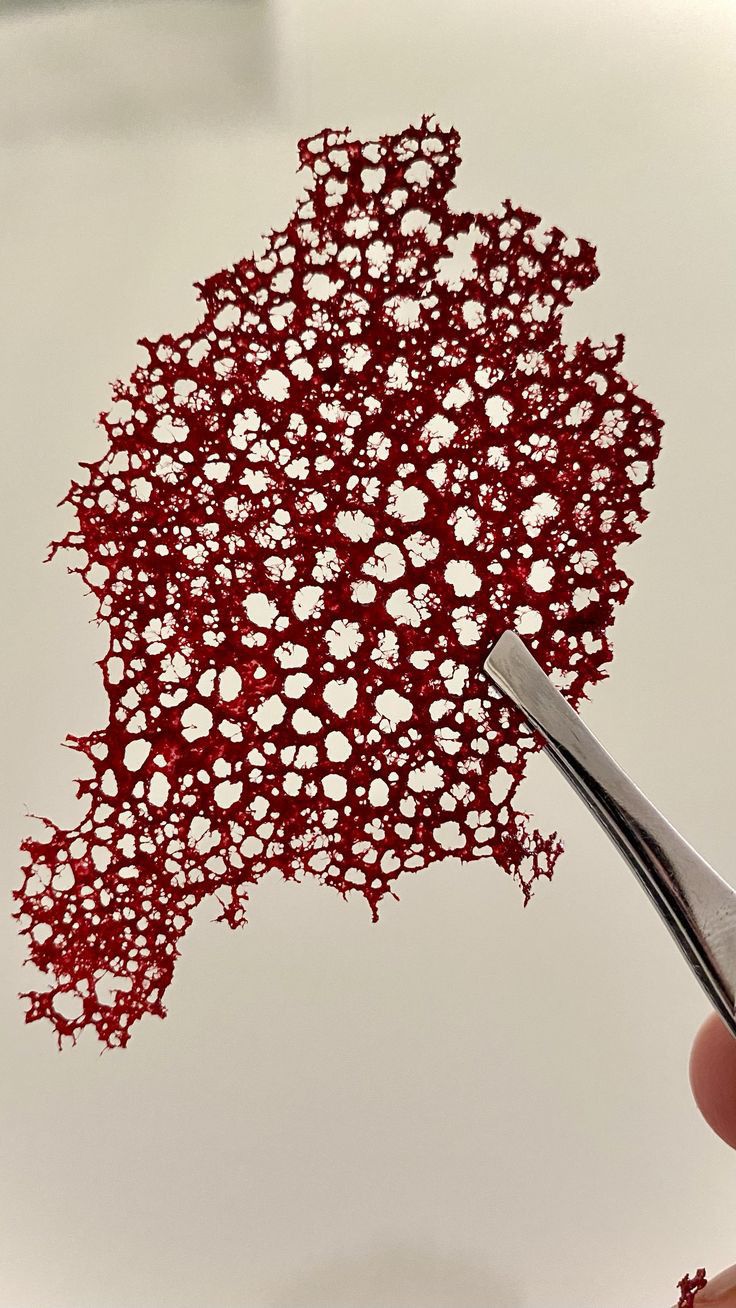
How to make basic coral tuile recipe ?
Coral tuile is a delicate, lacy, and crispy garnish made with a simple emulsion of water, oil, and flour. It’s commonly used in fine dining to enhance the visual appeal and texture of both sweet and savory dishes. The key to achieving its signature hole-filled structure lies in the right pan temperature and batter consistency. Coral tuile pairs beautifully with seafood, soups, desserts, and salads, making it a versatile addition to elegant plating.
Equipment
- Frying Pan or small Non stick pan
- Mixing bowls
- Whisk
Ingredients
- 100 ml Water
- 30 ml Vegetable oil
- 10 g All purpose flour
- 2 g Salt
- Food coloring optional
Instructions
- In a small bowl, whisk together water, oil, flour, and salt until well combined. The mixture will look thin and watery but don’t worry, that’s exactly what we want! If using food coloring, add a drop or two and mix well.
- Heat a non-stick pan over medium-high heat. No need for additional oil! The oil in the batter will do the job.
- Once the pan is hot, pour a small amount of batter using a small laddle or spoon or depending on the size you want into the center. It will immediately start bubbling and spreading. Let it cook undisturbed until the edges lift slightly and the tuile turns crispy.
- Let it slowly cook until the oil splattering is stopped and you start to see the lace formation.
- Carefully lift the tuile with a spatula and transfer it to a paper towel to drain excess oil. Let it cool completely, it will crisp up even more as it cools.
Notes
- Use a Non-Stick Pan: A non-stick pan is essential to prevent sticking and ensure an even, lacy texture. Avoid stainless steel or cast iron pans.
- Pan Temperature Matters: If the pan is too hot, the tuile will burn before forming its delicate holes. If too cold, it won’t crisp up properly. Medium-high heat works best.
- Don’t Stir Once Poured: After pouring the batter, resist the urge to spread or stir it. Let it naturally bubble and form its signature pattern.
- Thin Batter is Key: The batter should be very liquid—thicker batters won’t create the desired coral effect. If needed, add a little more water to loosen it.
- Avoid Overcrowding: Cook one tuile at a time for the best results. Pouring too much batter at once can prevent the proper formation of holes.
- Coloring Tips: Use gel or powder food coloring for vibrant hues. Liquid food coloring may alter the batter’s consistency.
-
Flavor Enhancements:
- Add grated Parmesan for a savory twist.
- Infuse with herbs and spices like paprika, turmeric, or black sesame for extra flavor.
- For a sweet version, add a tiny pinch of sugar and vanilla extract.
- Storing Coral Tuiles: Keep them in an airtight container at room temperature for up to 3 days. Avoid humid areas, as moisture can make them soft.
- Fixing Soft Tuiles: If your tuiles lose crispiness, reheat them in a dry pan over low heat for a few seconds to restore their crunch.
Nutrition
Calories: 30kcal | Carbohydrates: 1.2g | Protein: 0.2g | Fat: 3g | Saturated Fat: 0.3g | Sodium: 40mg | Calcium: 2mg